

The average tenure of a Chief Marketing Officer is barely thirty-six months. Why is this foundational growth role the most volatile position in the C-suite, and what does this staggering lack of continuity betray about the very strategic competence of global enterprise? This relentless churn is not merely a personnel issue, nor is it a simple failure of individual performance; it is a seismic indicator of a profound, often catastrophic, misalignment at the apex of corporate power, specifically between the Chief Executive Officer and the Chief Marketing Officer. The world’s titans of industry, the Tech Billionaires and Fortune 500 Leaders, are squandering billions of pounds in enterprise value by treating the CMO as a transient executor of advertising, rather than the Chief Custodian of Future Value and the indispensable partner in crafting corporate strategy.
This thought leadership demands a complete, uncompromising revaluation of this relationship, insisting that it is the ultimate determinant of whether an organisation secures transformative, enduring growth or succumbs to the slow, suffocating decline of irrelevance. We must strip away the pleasantries and confront the brutal fact that a dysfunctional CEO-CMO dynamic is the primary bottleneck to sustained, superior performance in the hyper-competitive digital age, a critical flaw that only the most intellectually courageous leaders will dare to address. The time for genial platitudes about collaboration is over; we require a strategic insurrection that places the voice of the customer, channelled through the CMO, directly into the heart of the boardroom's most critical decisions.
The Power Equation Rewritten: Why the CEO-CMO Dynamic Determines Enterprise Survival
Who truly commands the future of the organisation? The one who defines its strategy, or the one who controls how the world perceives it? For too long, the CMO has been viewed as the storyteller to the CEO’s strategist, a subordinate role positioned to translate the corporate vision into glossy narratives. Yet in the age of algorithmic disruption and intelligent automation, this hierarchy no longer holds. The modern enterprise does not live by strategy alone; it survives by relevance.
The CMO now sits at the intersection of data, intelligence, and human behaviour, translating real-time market signals into strategic action. The CEO, in turn, becomes the orchestrator of agility, relying on the CMO’s command of insight to direct capital, culture, and capability. Consider Unilever under Alan Jope’s leadership, where marketing moved from communication to conviction. Jope empowered his CMOs to become social architects, turning brand purpose into a growth lever. Likewise, at Discovery in South Africa, the marketing function operates as a behavioural science engine, shaping customer behaviour with precision data analytics that directly influence the CEO’s growth strategy.
The most successful organisations now understand this: the CMO is no longer a cost centre. They are a profit architect. And the CEO who grasps this truth transforms marketing from a department into a strategic weapon.
The Strategic Chasm: Bridging the Disconnect Between Vision and Voice
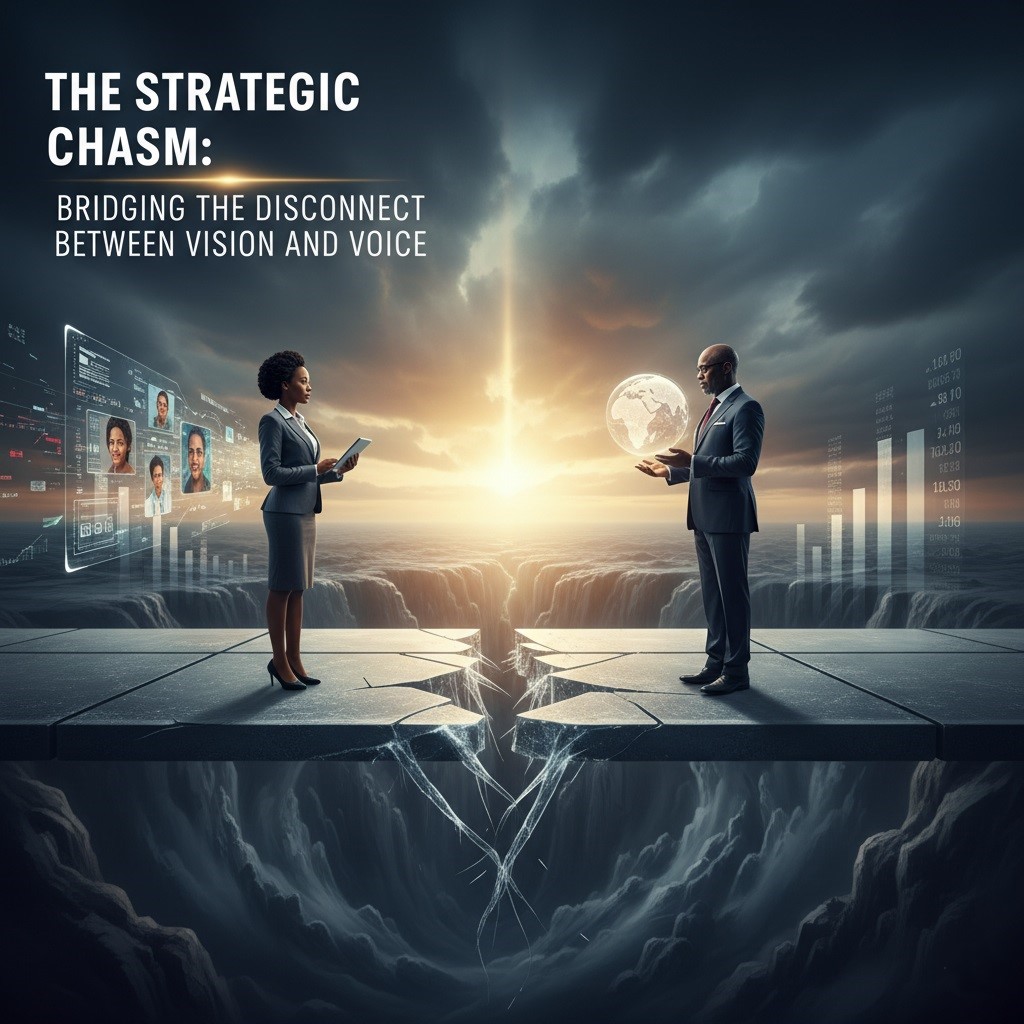
Is the marketing function a cost centre or a core growth engine for your organisation, and can your C-suite answer that question with perfect, quantifiable unanimity? The lamentable reality is that a significant divergence persists between how a CEO, often steeped in finance or operations, perceives marketing's contribution and how the CMO views their strategic mandate. Research consistently reveals this perceptual chasm, demonstrating that while most CEOs acknowledge marketing's importance, a substantial proportion of CMOs feel their strategic priorities are not genuinely shared or understood by the top executive, leading to a debilitating bifurcation of corporate effort.
The CEO's focus on short-term financial performance and immediate shareholder return often clashes with the CMO's imperative to build long-term brand equity, cultivate customer lifetime value, and execute complex digital transformation initiatives that yield results over a multi-year horizon. This temporal and tactical disconnect means that strategic marketing initiatives are frequently underfunded, abruptly cancelled, or structurally misaligned with the overarching corporate vision, condemning the organisation to a perpetual state of strategic stutter.
The solution lies in the CMO translating every aspect of their work, from brand narrative to media placement, into the financial vernacular of the CEO, demonstrating an unflinching command of return on investment and business-wide impact that transcends mere aesthetic metrics.
From Brand Custodian to Growth Architect: Redefining the Modern CMO as a Polymath
Can the CMO still afford to think in campaigns when the marketplace operates in milliseconds? The answer is no. The new CMO is a polymath: part strategist, part technologist, part futurist. They read data the way poets read emotion. They understand that creativity without analytics is vanity, and analytics without imagination is sterility.
Globally, the CMOs of companies such as Nestlé and Diageo have restructured their marketing ecosystems to merge performance intelligence with creative conviction. Their CMOs now lead integrated command centres that monitor customer sentiment in real time, translating insight into rapid commercial decisions. In South Africa, Nando’s exemplifies this hybrid intelligence. Its brand remains agile, provocative, and contextually intelligent, using marketing not as entertainment but as strategic engagement. Every campaign doubles as a societal pulse check, reinforcing the company’s identity as both brand and barometer.
To elucidate more, what if we were to acknowledge the CMO not as the head of the promotions department, but as the Chief Customer Officer by another name, the C-suite's sole advocate for the external market reality? The modern CMO’s remit has expanded beyond advertising to encompass data science, digital transformation, customer experience design, and an intricate understanding of the entire commercial funnel, effectively transforming the role into a general management function requiring an astonishing breadth of expertise. This evolution demands that the CMO be an Architect of Strategy, not merely an executor of the CEO’s pre-ordained vision, bringing market intelligence, behavioural insights, and a deep understanding of competitive dynamics to the genesis of all corporate planning.
To achieve this elevated status, the CMO must stop seeking validation solely through creative campaigns and start leveraging high-level data analytics to frame customer demand as the ultimate, unassailable growth metric, thereby providing the intellectual bedrock for the entire organisation's strategic pivot. Only when the CEO empowers the CMO with genuine cross-functional authority over customer-facing operations, allowing them to remove the frictional, internal siloes that routinely sabotage the customer journey, can the full value of the function be unlocked.
The CMO who remains confined to communications will be obsolete. The one who masters analytics, artificial intelligence, and behavioural economics becomes indispensable. The CEO’s growth strategy now depends on the CMO’s fluency in future literacy.
Strategic Symbiosis: When Vision Meets Velocity
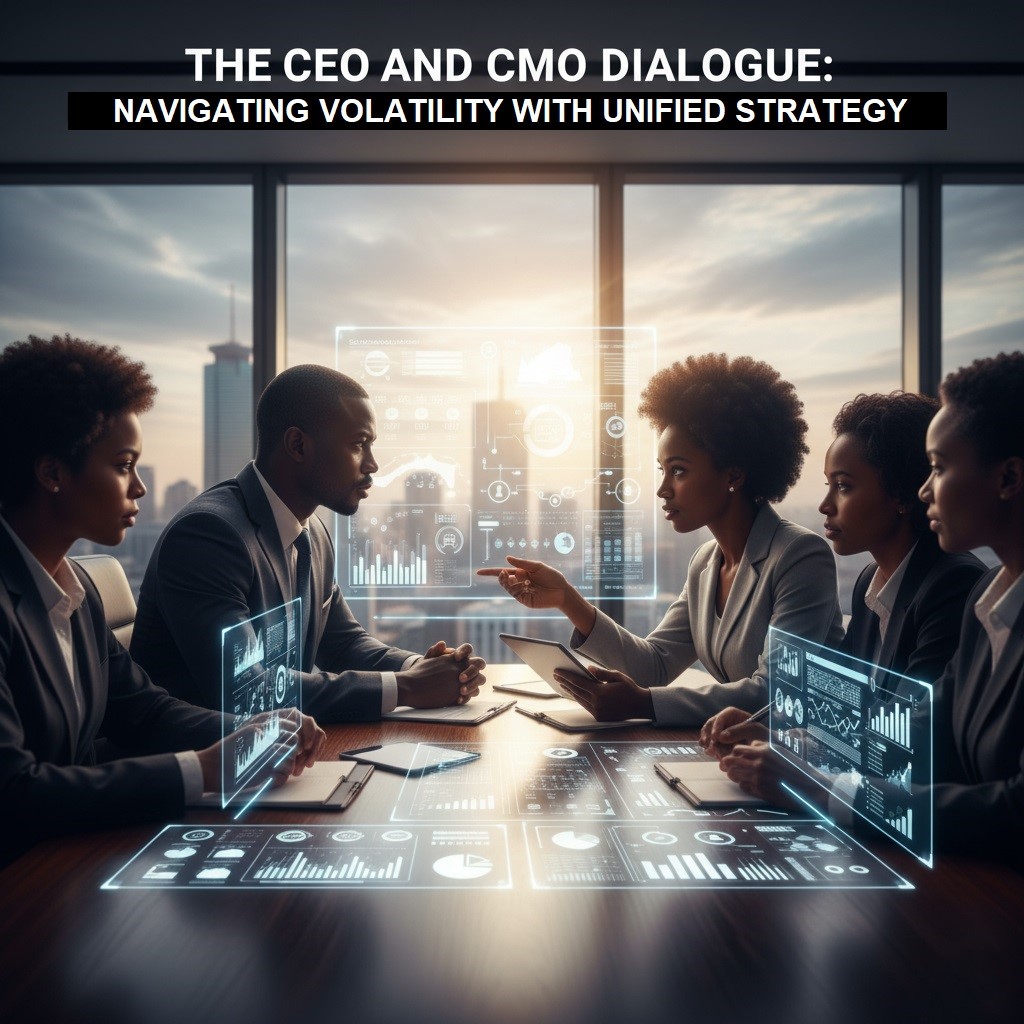
If the CEO defines “where”, the CMO defines “why” and “how fast”. This interplay between direction and momentum creates the enterprise’s true growth velocity. Yet most corporations still treat their CMO as a tactical executor rather than a strategic equal. This cultural misalignment is not merely inefficient; it is existentially dangerous.
When Bernard Arnault refined the strategic direction of LVMH, he did not simply consolidate luxury brands; he constructed an ecosystem of desire. His vision was not operational; it was psychological. Arnault’s CMO counterparts were not advertising executives; they were cultural economists, decoding how aspiration and exclusivity could be translated into sustained profitability. Every brand message was treated as an asset class, every campaign a capital investment in cultural equity. The alliance between CEO and CMO within LVMH’s maisons exemplified the art of synchronising perception with performance, transforming storytelling into the very architecture of value creation. The result was not marketing brilliance alone, but strategic orchestration at scale; an empire built on emotional intelligence as much as financial acumen.
Similarly, in South Africa, Woolworths’ resurgence in brand equity stemmed not from price strategy and was not an exercise in retail recovery, but from a unified C-suite approach to purpose, design, and customer intelligence. The company’s leadership reframed marketing as the enterprise’s conscience, not its cost. The CMO’s insights, understanding of shifting consumer trust, sustainability consciousness, and aesthetic intelligence informed the CEO’s operational reforms, product strategy, and customer engagement philosophy. The outcome: restored prestige, renewed profitability, and a recalibrated brand identity aligned with contemporary values. In effect, Woolworths demonstrated that the CEO-CMO alliance, when genuinely fused, can reposition a brand from transactional to transcendent, a principle as relevant to Sandton as it is to Paris.
This is the new corporate equation: the CEO commands capital; the CMO commands conviction. The synthesis of both is the new currency of competitiveness.
The Data Renaissance: Intelligence as the New Language of Leadership
In the modern enterprise, data is the dialect of dominance. Yet while CEOs speak in EBITDA, market share, and valuation, CMOs speak in engagement, reach, and brand equity. This linguistic divide dilutes the power of alignment. The future CMO bridges this gap by translating marketing metrics into financial language. They demonstrate how a 2% increase in brand relevance equates to a measurable rise in share price.
Globally, companies such as L’Oréal have pioneered this shift. Its marketing transformation integrates AI-driven consumer insights directly into board-level strategy, empowering its CEO to make faster, evidence-based decisions. In South Africa, Capitec Bank’s marketing operations function similarly, where customer analytics fuel CEO-level decisions on product innovation, customer acquisition, and brand experience.
The modern CEO must therefore demand from the CMO not reports, but foresight. The CMO, in turn, must deliver marketing that quantifies impact and predicts opportunity. When both speak the same language – intelligence – the enterprise achieves what competitors cannot: precision in strategy, speed in execution, and superiority in adaptation.
The Cultural Covenant: Trust, Courage, and Creative Tension
What sustains the relationship between two leaders who both believe they own the future? Trust, but not the naïve kind. This is trust forged in creative tension, the kind that produces progress through productive conflict. The CEO must trust the CMO’s grasp of external reality, while the CMO must trust the CEO’s sense of institutional destiny.
At Netflix, Reed Hastings and his marketing leadership exemplified this balance. Marketing insights shaped content strategy, while executive vision reinforced brand identity. Their dialogue was candid, even combative, yet always constructive. In South Africa, MTN’s collaboration between its CEO and CMO during its “What Are We Doing Today?” campaign demonstrated this trust in practice. The CEO endorsed risk; the CMO delivered resonance. The result was not just a campaign, but a cultural phenomenon that repositioned the brand in the minds of millions.
The lesson is clear: alignment is not agreement; it is understanding. The CEO-CMO partnership must be grounded in mutual audacity, where both leaders share one belief: that growth without meaning is hollow, and meaning without growth is futile.
The Nexus of Alignment: Practical Implementation for Global and South African Titans

How can the world's most sophisticated corporations, from the high-tech lords of Silicon Valley to the robust financial services firms of Sandton, codify this essential partnership for transformational advantage? The implementation begins with the establishment of a Unified Growth Charter, a non-negotiable document co-authored by the CEO and CMO that explicitly aligns marketing objectives, financial targets, and the long-term brand purpose, thereby eliminating ambiguity from the outset.
For a global corporation like Unilever, the successful partnership between a CEO and a CMO like Keith Weed saw the creation of the Sustainable Living Plan. This powerful initiative fused business goals with sustainability and demonstrated that purpose-driven brands could significantly outperform their non-sustainable peers, illustrating a profound, shared vision. Conversely, the South African context, typified by companies like Vodacom, highlights the critical challenge of reconciling the CMO’s long-term brand-building objectives with the CEO’s immediate operational pressures, such as the unpredictable infrastructural crisis of load shedding.
Case Study in Synchronicity: The Vodacom Imperative and Global Lessons
Is it truly possible to maintain a long-term brand vision when external, macroeconomic cataclysms demand constant, short-term tactical diversions of capital? The Vodacom CEO and CMO dialogue provides a searingly relevant case study, demonstrating that the foundation of success rests on continuous, unvarnished communication and a mutual agreement on the trade-off matrix between strategic brand investment and immediate financial exigency. When the CMO, as Vodacom’s Andisa Ntsubane suggests, takes the initiative to speak the language of the business and quantify brand health in terms of enterprise value rather than superficial awareness metrics, the trust required for this high-stakes negotiation is established.
A tangible solution, applicable to any South African entity struggling with volatility, is the co-creation of an Agile Strategic Fund, a ring-fenced portion of the marketing budget jointly managed by the CEO and CMO, specifically designed to address sudden, high-impact national emergencies without compromising the core, long-term brand investment narrative.
On the global stage, the successful growth trajectory of Amazon under Jeff Bezos and his marketing leadership exemplifies a relentless customer-centric obsession where the CMO’s customer insights were consistently and aggressively translated into core operational and strategic imperatives across the entire enterprise, serving as the benchmark for a truly synergistic partnership. This uncompromising commitment to the consumer, championed at the very top, proves that alignment is not a soft skill, but a hard commercial discipline.
The New Executive Synthesis: Data, Trust, and Shared Accountability
What is the price of continuing to allow this critical relationship to be governed by misunderstanding, distrust, and short-termism in a world defined by exponential technological and geopolitical flux? It is the slow, silent surrender of market leadership to a competitor who has mastered this executive synthesis.
The future of superior corporate performance hinges on the CMO and CEO building a foundation of radical transparency rooted in shared data and metrics, moving beyond mere vanity metrics to a unified framework that ties every marketing dollar to customer lifetime value and shareholder return, a feat often achieved through a tighter, triadic alignment with the CFO. The CEO must possess the intellectual humility to accept the CMO as the pre-eminent expert on the future market and the customer's psychic landscape, while the CMO must earn the unquestioning strategic trust of the CEO by demonstrating an executive intellect that spans commercial, financial, and technological domains, not merely the creative sphere.
This partnership must operate as a singular, indivisible decision engine, where the CMO’s deep-market sensing and the CEO’s enterprise-wide command fuse into an unrivalled strategic foresight.
From Alignment to Fusion: The Future of Executive Collaboration
As enterprises migrate towards intelligent ecosystems, the boundary between the CEO and CMO must dissolve entirely. The future enterprise is not a hierarchy; it is a neural network. Leadership will no longer be defined by function, but by fusion; the integration of strategic insight, creative intelligence, and technological command.
Already, advanced corporations such as IBM, Tencent, and Amazon are moving towards unified intelligence frameworks, where marketing, data science, and executive decision-making coexist in a single real-time architecture. In South Africa, forward-thinking entities such as Discovery and FNB are experimenting with similar models, embedding marketing analytics directly into board-level dashboards to synchronise customer sentiment with executive decision cycles.
This is not evolution. It is convergence. The CEO and CMO no longer collaborate; they co-orchestrate. Together, they compose the music of the marketplace: strategy as rhythm, marketing as melody, innovation as harmony.
The Imperative for an Executive Revolution: Command the Narrative, Command the Future

Who owns the story owns the strategy. In a world defined by noise, narrative is power. The CMO must craft it; the CEO must amplify it. When both move as one, the enterprise transcends competition and becomes a category of its own.
The leaders who understand this do not merely build companies; they engineer movements. They recognise that in the age of intelligent capital, the most valuable asset is neither technology nor talent, but alignment; the seamless synchrony of vision and voice at the very top.
We stand at a precipice where the fate of an organisation is no longer determined by its product alone, but by the integrity of the narrative it projects and the depth of the customer relationships it cultivates. The volatile tenure of the CMO is not an indictment of the marketing profession; it is an explicit condemnation of an executive suite's failure to integrate the voice of the market into the sinews of corporate strategy.
The evidence is undeniable: you can no longer afford the luxury of a misaligned partnership at the pinnacle of your command structure. I challenge you now, with unyielding conviction, to move beyond the bureaucratic inertia and the cultural pathologies that have historically diminished the CMO role. Immediately initiate the process of co-authoring a Unified Growth Charter; unconditionally empower your CMO with cross-functional authority over the entire customer journey; and courageously demand that all marketing activities are articulated in the uncompromised language of shareholder value creation.
The question for today’s corporate titans is not whether the CEO leads the CMO or vice versa. The question is: can your organisation afford a leadership divide when the future demands unison? Your growth trajectory, your legacy, and the very survival of your enterprise are contingent upon the immediate, absolute, and unprecedented synchronicity of your Chief Executive and your Chief Marketing Officer.
The call to action is clear: CEOs, empower your CMOs to think like strategists. CMOs, challenge your CEOs to think like marketers. Fuse intellect with imagination. Command the narrative, and you will command the future. Fail to, and you will become a footnote in someone else’s story.
That is the difference between those who build legacies and those who simply lead companies.
Images by Bandile Ndzishe of Bandzishe Group
About bandile ndzishe

Bandile Ndzishe is the CEO, Founder, and Global Consulting CMO of Bandzishe Group, a premier global consulting firm distinguished for pioneering strategic marketing innovations and driving transformative market solutions worldwide. He holds three business administration degrees: an MBA, a Bachelor of Science in Business Administration, and an Associate of Science in Business Administration.
With over 29 years of hands-on expertise in marketing strategy, Bandile is recognised as a leading authority across the trifecta of Strategic Marketing, Daily Marketing Management, and Digital Marketing. He is also recognised as a prolific growth driver and a seasoned CMO-level marketer.
Bandile has earned a strong reputation for delivering strategic marketing and management services that guarantee measurable business results. His proven ability to drive growth and consistently achieve impactful outcomes has established him as a well-respected figure in the industry.
As an AI-empowered and an AI-powered marketer, I bring two distinct strengths to the table: empowered by AI to achieve my marketing goals more effectively, whilst leveraging AI as a tool to enhance my marketing efforts to deliver the desired growth results. My professional focus resides at the nexus of artificial intelligence and strategic marketing, where I explore the profound and enduring synergy between algorithmic intelligence and market engagement.
Rather than pursuing ephemeral trends, I examine the fundamental tenets of cognitive augmentation within marketing paradigms. I analyse how AI's capacity for predictive analytics, bespoke personalisation, and autonomous optimisation precipitates a transformative evolution in consumer interaction and brand stewardship. By extension, I seek to comprehend the strategic applications of artificial intelligence in empowering human capability and fostering innovation for sustainable societal advancement.
In essence, I explore how AI augments human decision-making in both marketing and other domains of life. This is not merely an interest in technological novelty, but a rigorous investigation into the strategic implications of AI's integration into the contemporary principles of marketing practice and its potential to reshape decision-making frameworks, enhance strategic foresight, and influence outcomes in diverse areas beyond the marketing sphere.