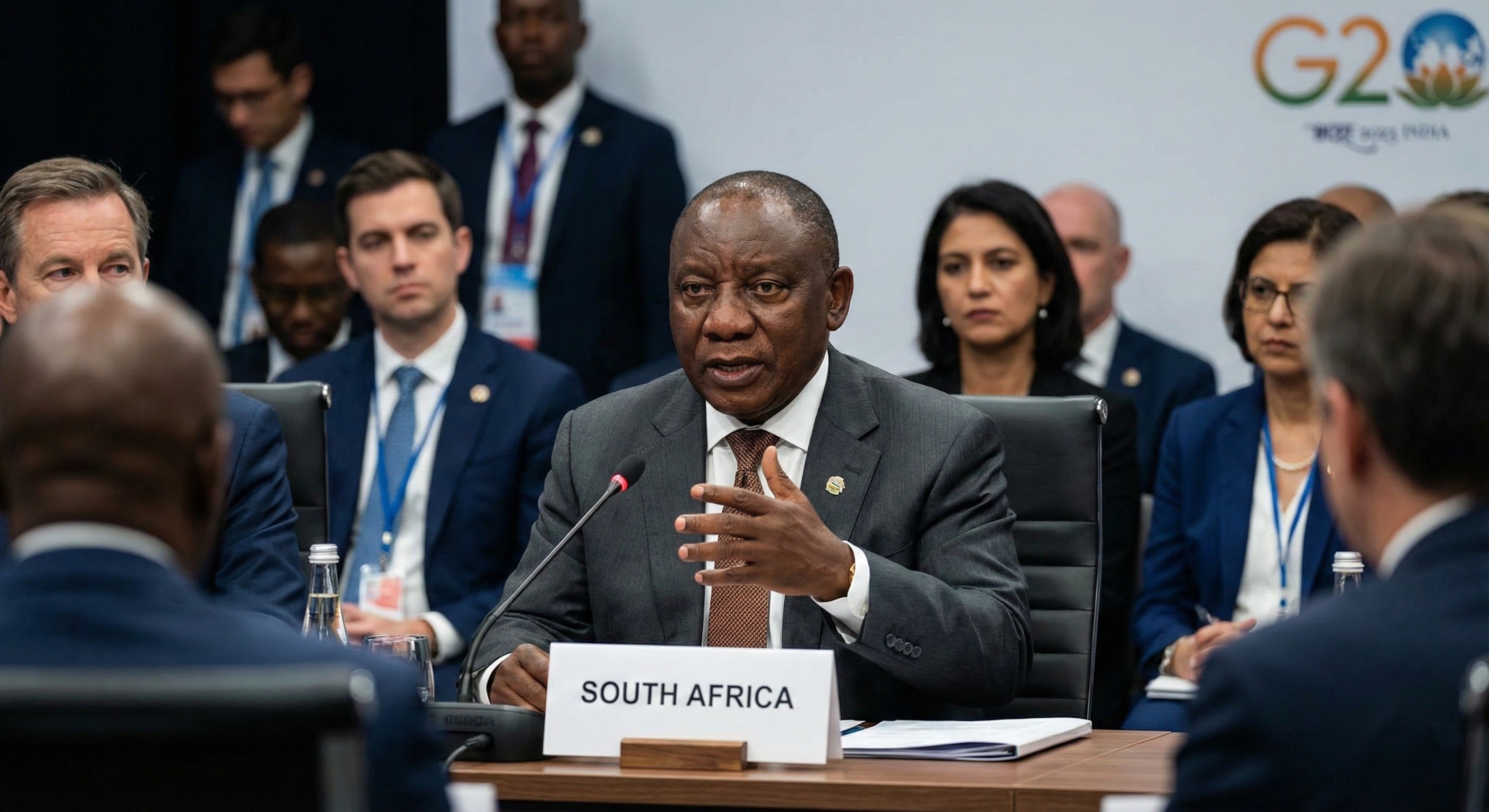

Certain junctures in global affairs erupt with such force and authority that they transcend cautious exposition and refuse to submit to polite interpretation. South Africa’s hosting and chairing of the G20 is one of them. The world did not expect a nation from the Global South to command such diplomatic gravity, shape the tempo of geopolitical discourse or recalibrate the centre of economic seriousness within a single summit cycle. Yet that is precisely what has happened. The question that now confronts chief executives, investors, policy architects and multilateral leaders is disarmingly simple. Can the world afford not to take South Africa’s G20 leadership with the seriousness it has earned?
This is not atmospheric praise. It is a structural reality. The summit has repositioned South Africa as an economic actor with the capacity to convene, to synthesise, to reconcile competing powers and to articulate a coherent future for global coordination. Any analysis that overlooks this shift risks misunderstanding the trajectory of the next decade of international economic governance.
South Africa has not merely hosted the G20, it has declared its economic intent before the world. The summit was not a ceremonial gathering of leaders, nor a fleeting spectacle of diplomacy, but a strategic inflection point that has repositioned South Africa within the architecture of global commerce. The question that must now be asked, and answered with clarity, is whether South Africa will translate this moment into enduring economic power, or whether it will allow the opportunity to dissipate into the ether of history. For global leaders, CEOs, and billionaires, the urgency is unmistakable: South Africa’s G20 legacy is not about what happened during the summit, but about what will happen because of it.
A New Centre of Gravity in Global Governance: South Africa’s Emergence as a Strategic Anchor of Global Decision Making
The international system has become accustomed to expecting intellectual authority from the usual capitals. Washington, Brussels, Beijing, Berlin, Tokyo, London. The Johannesburg summit disrupted that symmetry. It did so by demonstrating that South Africa possesses an uncommon ability to engage advanced economies, emerging markets and developing nations with equal fluency. This rebalanced the psychological architecture of the G20. It forced world leaders to recognise a country that speaks from both historic struggle and modern capability, from both moral legitimacy and economic ambition.
The global community has long underestimated the strategic seriousness of the African continent. South Africa’s leadership has confronted that miscalculation. It has succeeded in placing African industrialisation, African supply chain integration, African investment frameworks and African infrastructure advancement at the centre of the summit’s narrative. This shift alone carries vast implications, not only for South Africa but for the investment strategies of banks, corporates and sovereign funds across the world.
Why the World Must Take South Africa Seriously: A Nation Demonstrating Unmistakable Authority in the Architecture of International Power
The world must recognise the magnitude of what has taken place because the stakes are far higher than diplomatic prestige. South Africa has asserted its ability to shape policy, influence institutional architecture and orchestrate consensus among fractious global powers. This has revealed an authority that carries consequences for capital flows, trade agreements, infrastructure financing and economic partnerships. It signals that South Africa is no longer a peripheral participant in global decision-making; it has become a strategic anchor for the international community.
This repositioning matters because investors, policymakers and multinational executives take cues from who hosts the agenda and who frames the language of cooperation. South Africa’s voice at the table now informs expectations about stability, contract enforcement, regulatory clarity and long-term partnership. Those signals are material to investment decisions, corporate structuring and sovereign risk assessments.
The world can no longer dismiss South Africa as a symbolic presence in global forums. It must understand that this country possesses the intellectual depth, the institutional memory, and the geopolitical literacy to interpret global tensions with clarity and to propose frameworks with credibility. This is the new paradigm that investors and governments must now accept.
The Economic Dividend of Hosting the G20: Converting Diplomatic Prestige into Enduring National Prosperity
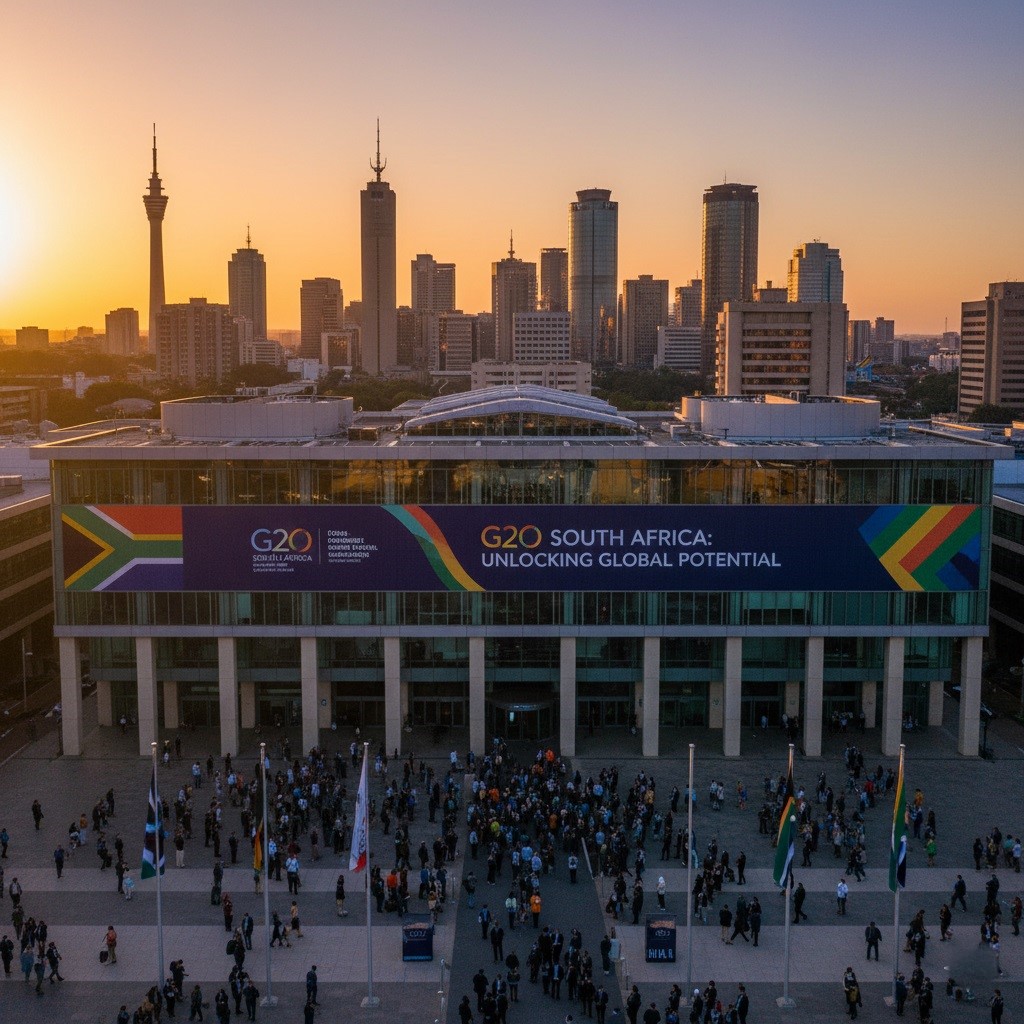
The economic benefits of hosting the summit extend far beyond the immediate consumption effects of delegates, media and security operations. These short-term injections in hospitality, aviation, logistics and urban services are real and measurable. Yet they represent only the initial layer of a deeper economic transformation.
1. Overall Immediate Dividends: Tangible Gains from Hosting the Summit
The economic benefits of hosting the G20 are neither abstract nor deferred. They are immediate, measurable, and strategically significant. Tourism surged as thousands of delegates, journalists, and observers descended upon South Africa, filling hotels, restaurants, and transport networks. Hospitality revenues reached record highs, while local businesses experienced unprecedented demand. Infrastructure investments, from upgraded airports to enhanced digital connectivity, were accelerated to meet summit requirements, leaving permanent improvements that will serve commerce long after the delegations have departed. Employment opportunities, particularly in logistics, security, and event management, provided short-term gains, but more importantly, they demonstrated South Africa’s capacity to mobilise resources at scale. These dividends are not trivial. They are the foundation upon which long-term strategic benefits can be built.
2. Overall Strategic Dividends: Positioning South Africa as a Gateway to Africa
The true legacy of the G20 lies not in immediate gains, but in strategic dividends. South Africa has positioned itself as the indispensable gateway to Africa, a continent whose demographic dynamism and resource wealth make it the next frontier of global growth. By convening the G20, South Africa has signalled to investors that it is not merely a participant in global markets, but a convenor of global power. Trade partnerships with G20 members are strengthened, investment flows are catalysed, and South Africa’s voice in global governance is amplified. The summit has elevated South Africa’s reputation as a reliable interlocutor between Africa and the world, a role that carries both economic opportunity and geopolitical responsibility.
3. A Surge in Investor Confidence
Institutional investors assess nations through the dual lens of stability and seriousness. Hosting the G20 signals both. It assures markets that South Africa can coordinate global security, maintain operational readiness and run complex logistical systems with precision. Investor relations teams in global corporations will recalibrate their risk benchmarks accordingly.
4. A Repositioned Financial Hub
Johannesburg has long aspired to serve as the continental centre for financial expertise, banking, capital markets and insurance innovation. The summit has accelerated this aspiration by demonstrating the city’s capacity to host high-stakes dialogue and global leaders with operational excellence. Financial institutions are likely to scale their presence, expand regional mandates and deepen capital markets activity.
5. Expanded Multilateral Engagement
South Africa’s credibility in development finance has grown. Its role in the G20 has strengthened its voice within the African Continental Free Trade Area, the African Development Bank, the United Nations bodies and the broader Global South networks. These connections have the potential to unlock financing for energy transition, transport corridors, digital infrastructure and industrial diversification.
6. A Stimulus for Local Industry
The pre-summit and post-summit cycles generate significant procurement opportunities across construction, telecommunications, security technology, conferences, creative industries and professional services. These opportunities stimulate small and medium enterprises and strengthen supply chains.
7. Greater Visibility for Strategic Sectors
Sectors such as renewable energy, minerals critical for the global energy transition, agritech, automotive manufacturing, digital innovation, logistics and financial services have gained unprecedented visibility. Global corporations seeking regional partners will now reconsider South Africa as a reliable anchor and not merely an entry point.
Case Studies that Illuminate Tangible Impact: Practical Examples Where Policy Meets Market Momentum
The scale of South Africa’s G20 dividend becomes clearer when one examines concrete developments already underway. These examples demonstrate that the summit’s outcomes are not abstract ambitions but catalysts for measurable activity across multiple sectors. The following cases illustrate how political authority, economic credibility and global visibility are translating into practical momentum that can reshape national and continental possibilities.
Case Study 1: Renewable Energy Investment Pipelines: Private Capital Responding to Policy Credibility
In the months leading to the summit, several major renewable energy players began exploratory engagements with South African counterparts. These conversations, initiated at the executive level, are expected to translate into solar and wind investments in inland provinces. The G20 spotlight has strengthened the perception that South Africa is serious about energy reform, which reassures investors who previously adopted a wait-and-see posture.
Case Study 2: Tourism and Hospitality Sector Expansion: Reputation as a Vector of Demand
Cape Town and Johannesburg reported significant pre-summit and post-summit increases in premium hotel bookings and long-haul travel enquiries. Tourism analysts note that this initial uplift commonly predicts a multi-year increase in international visitor flows, because global travellers prefer destinations that have proven capacity to host complex events with professionalism and safety.
Case Study 3: Financial Sector Growth in Sandton: Headquarters and Mandates Reconsidered
Senior executives in banking and asset management have privately confirmed that the summit has revived internal discussions about expanding regional headquarters in Sandton. The credibility of hosting world leaders has reinforced perceptions of Johannesburg as the most stable financial ecosystem on the continent, prompting institutions to reassess capital allocation and talent deployment strategies.
Case Study 4: Narratives of Transformation: From Sector Growth to Individual Enterprise Gains
Consider the profound reality of a genuine economic boom, where sector-wide growth is translated into tangible monetary gains at the level of individual enterprises. As alluded to above, Johannesburg’s hospitality sector reported record revenues during the summit, with occupancy rates exceeding expectations and international exposure attracting new investment. In Cape Town, a fintech firm leveraged G20 networking opportunities to secure partnerships with European and Asian investors, accelerating its growth trajectory and positioning itself as a continental leader in digital finance. Durban’s infrastructure projects, expedited to meet summit deadlines, have left lasting benefits for local communities, improving transport efficiency and catalysing urban development. These narratives are not isolated anecdotes. They are emblematic of the broader transformation that hosting the G20 has unleashed.
The Continental Gain, Africa’s Collective Advancement: Amplifying Continental Industrialisation and Integration
South Africa’s hosting of the G20 has revived global attention on Africa’s economic potential. It has strengthened continental commitment to industrialisation, to trade harmonisation and to deeper cooperation on energy, logistics and agricultural value chains. The alignment between South Africa’s national strategy and the ambitions of the African Continental Free Trade Area has now become clearer to international observers. This will accelerate cross-border investment and deepen regional partnerships.
No other nation in the African Union shares South Africa’s combination of industrial capacity, financial services expertise and diplomatic maturity. The summit has placed that combination in full view of multinational boards, sovereign funds and policy makers.
A Blueprint for South Africa’s Next Decade: Strategic Pathways for Converting Influence into Irreversible Economic Momentum

If South Africa transforms the momentum of its G20 legacy into a coherent long-term national strategy, the country will unlock a constellation of opportunities that extend across governance, industry, investment and international cooperation. This conversion requires discipline, clarity of purpose and a willingness to extend the summit’s diplomatic authority into sustained institutional reform and economic redesign. In practical terms, the tasks are fourfold.
1. Consolidate Global Partnerships
Government must expedite agreements that translate diplomatic capital into actionable projects, notably in energy transition, technology transfer, infrastructure financing and agricultural modernisation. Each signed framework becomes a signal to private capital that South Africa is open for meaningful, large-scale partnerships.
2. Deepen Investor Relations Efforts
The private sector must use the summit as an evidentiary platform. Corporate leaders should initiate targeted roadshows, engage multinational boards and present clear investment cases that link political credibility to commercial opportunity.
3. Accelerate Public Sector Reform
Operational credibility must be institutionalised. Ports, rail corridors, energy generation capacity and regulatory frameworks must be modernised and monitored with transparent performance metrics. Reforms that reduce transaction costs will compound investor confidence.
4. Position South Africa as Intellectual Capital for African Economics
Universities, think tanks and policy institutes must be resourced to produce applied research that supports industrial strategy, trade policy and governance innovation. Intellectual leadership will attract partnerships and fortify the country’s role as a continental policy convener.
Global Reflections: South Africa As A Laboratory of Global Trends
Why should global leaders pay attention to South Africa’s G20 legacy? Because the nation embodies both opportunity and complexity. Its diverse consumer base, its growing technology and biotechnology sectors, and its strategic position within emerging markets make it a laboratory for global trends. South Africa’s ability to convene the G20 demonstrates its institutional competence and its capacity to shape discourse at the highest level. For CEOs and billionaires seeking to anticipate the next wave of competitive advantage, South Africa offers a vantage point from which to observe and participate in the unfolding revolution of African economic integration.
Policy Implications: Leadership, Governance, and Institutional Reform
The benefits of hosting the G20 will not automatically translate into enduring economic power. They must be harnessed through visionary leadership, institutional reform, and strategic clarity. South Africa must ensure that summit visibility is converted into sustained growth by strengthening governance, enhancing transparency, and fostering collaboration between government, business, and academia. Policy frameworks must be designed to attract foreign direct investment, incentivise innovation, and integrate South Africa more deeply into global value chains. The G20 legacy will be measured not by the spectacle of the summit, but by the reforms and strategies that follow.
Philosophical Provocation: The Anatomy of Opportunity
What is opportunity if not the convergence of preparation and timing? South Africa has prepared by building institutions, cultivating markets, and investing in infrastructure. The timing is now, as global leaders seek new frontiers of growth and stability. The anatomy of opportunity lies in the ability to recognise that hosting the G20 was not an end, but a beginning. The summit has provided South Africa with reputational capital, infrastructural dividends, and strategic positioning. The question is whether this capital will be spent wisely or squandered through inertia.
The Echo of Inevitability: A Force That Cannot Be Denied
Nations are not judged by the events they host; they are judged by what they build thereafter. South Africa has been handed an opportunity that few nations receive in a generation. The world has seen its capability. The summit has delivered visibility, credibility and catalytic momentum. The immediate question is not whether the world will take South Africa seriously. The immediate question is whether South Africa will now insist on being taken seriously and act with the discipline and ambition that position demands.
The global arena has opened its doors. South Africa must walk through them with clarity, ambition and the resolve to shape its future rather than wait for others to define it. The country’s hosting of the G20 is not a fleeting spectacle, but a declaration of economic intent. The dividends will be claimed not by those who observe, but by those who act. For South African firms, the opportunity is to lead rather than follow, to command rather than be commanded. For global leaders, the imperative is to recognise that the future of commerce lies not merely in established markets, but in emerging arenas where ambition meets capacity. The time to act is now. The leaders who embrace South Africa’s G20 legacy will not simply participate in the future. They will own it.
Images by Bandile Ndzishe of Bandzishe Group
About bandile ndzishe

Bandile Ndzishe is the CEO, Founder, and Global Consulting CMO of Bandzishe Group, a premier global consulting firm distinguished for pioneering strategic marketing innovations and driving transformative market solutions worldwide. He holds three business administration degrees: an MBA, a Bachelor of Science in Business Administration, and an Associate of Science in Business Administration.
With over 29 years of hands-on expertise in marketing strategy, Bandile is recognised as a leading authority across the trifecta of Strategic Marketing, Daily Marketing Management, and Digital Marketing. He is also recognised as a prolific growth driver and a seasoned CMO-level marketer.
Bandile has earned a strong reputation for delivering strategic marketing and management services that guarantee measurable business results. His proven ability to drive growth and consistently achieve impactful outcomes has established him as a well-respected figure in the industry.
As an AI-empowered and an AI-powered marketer, I bring two distinct strengths to the table: empowered by AI to achieve my marketing goals more effectively, whilst leveraging AI as a tool to enhance my marketing efforts to deliver the desired growth results. My professional focus resides at the nexus of artificial intelligence and strategic marketing, where I explore the profound and enduring synergy between algorithmic intelligence and market engagement.
Rather than pursuing ephemeral trends, I examine the fundamental tenets of cognitive augmentation within marketing paradigms. I analyse how AI's capacity for predictive analytics, bespoke personalisation, and autonomous optimisation precipitates a transformative evolution in consumer interaction and brand stewardship. By extension, I seek to comprehend the strategic applications of artificial intelligence in empowering human capability and fostering innovation for sustainable societal advancement.
In essence, I explore how AI augments human decision-making in both marketing and other domains of life. This is not merely an interest in technological novelty, but a rigorous investigation into the strategic implications of AI's integration into the contemporary principles of marketing practice and its potential to reshape decision-making frameworks, enhance strategic foresight, and influence outcomes in diverse areas beyond the marketing sphere.