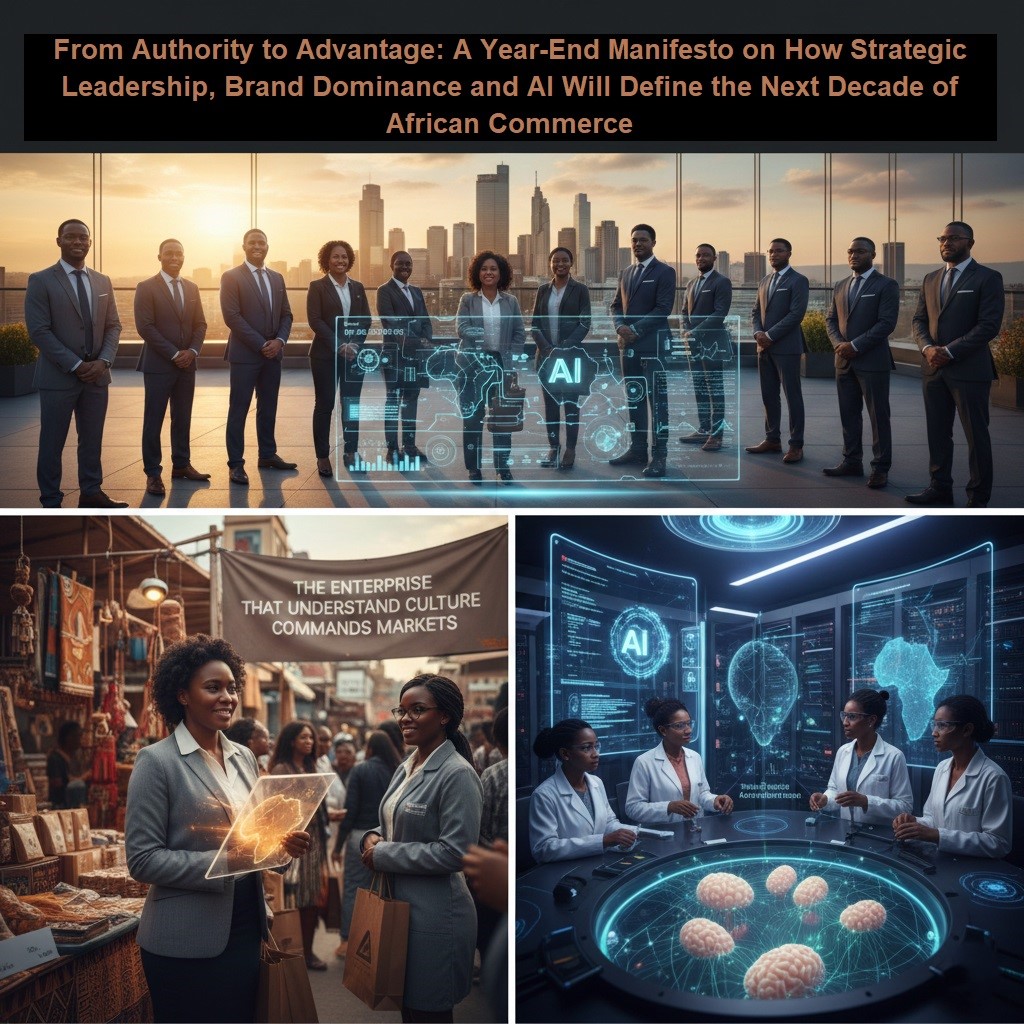

This year-end manifesto is written for those who refuse to watch the world move without them. It is crafted for the chief executive who senses that the global commercial order is shifting, for the investor who recognises that capital now rewards clarity, for the academic who understands that ideas have become instruments of statecraft, and for the billionaire who sees that Africa offers the final frontier of scale and velocity. It is written to reframe the strategic conversation, to challenge complacency, and to demand that African and global leaders confront the architecture of the future with unrelenting seriousness. Nothing in this moment rewards timidity. Everything rewards decisive vision.
This is a world in search of decisive strategic leaders who can interpret opportunity at the correct altitude. It is a continent in search of its moment. Every era reveals its defining truth in a single, piercing moment. This year’s truth is unforgiving. Those who cannot transform authority into advantage will vanish from the next decade of global commerce. The African continent, long spoken about in the language of potential, now demands to be spoken about in the language of power. Too many leaders have mistaken visibility for influence and position for mastery. The real question is unavoidable. Who among today’s senior leaders possesses the intellectual precision, strategic ferocity, and continental imagination required to lead the next cycle of African economic ascendancy? The answer will shape the trajectory of markets, industries, and nations for a generation.
And so, the question emerges with sharper force. If Africa is indeed entering the most consequential decade of its commercial life, what kind of leadership will shape its destiny? The answer demands more than reflection. It demands a manifesto.
The New Centre of Gravity of Global Power: The Unfinished Architecture of African Enterprise
African commerce stands on the brink of a historic inversion of power, and those who fail to recognise this moment will spend the next decade negotiating from a position of irreversible disadvantage. There is an emergent realignment of global influence, and the centre of gravity is shifting toward leaders who possess the strategic foresight to convert information into authority, markets into engines of regional ascendance, and intelligence systems into platforms for sovereign competitiveness.
What leader can afford complacency when economic blocs are recalibrating their value chains, when artificial intelligence is recasting the determinants of national growth, and when brand authority is becoming a geopolitical instrument in its own right? This is not merely a conversation about innovation; it is a reckoning with the unprecedented strategic choices that will determine which nations rise and which fall.
African chief executives, global technology magnates, policy architects, and institutional strategists must now confront a single, piercing question. Who will command the next decade of African commerce, and by what strategic logic will that command be secured? In a continent defined by youthful demographics, accelerating digital adoption, and fierce competition for influence, the leaders who act first will reshape the landscape while those who hesitate will be reshaped by it. The argument is simple; the consequences are not. Authority is no longer a position; it is a capability. Advantage is no longer inherited; it is engineered. And African enterprise stands ready to demonstrate to the world what it means to lead with intelligence, conviction, and the determination to redefine the possible.
The Strategic Truths of the Decade: Markets that Move Faster than Institutions and Leaders Who Must Move Faster Still
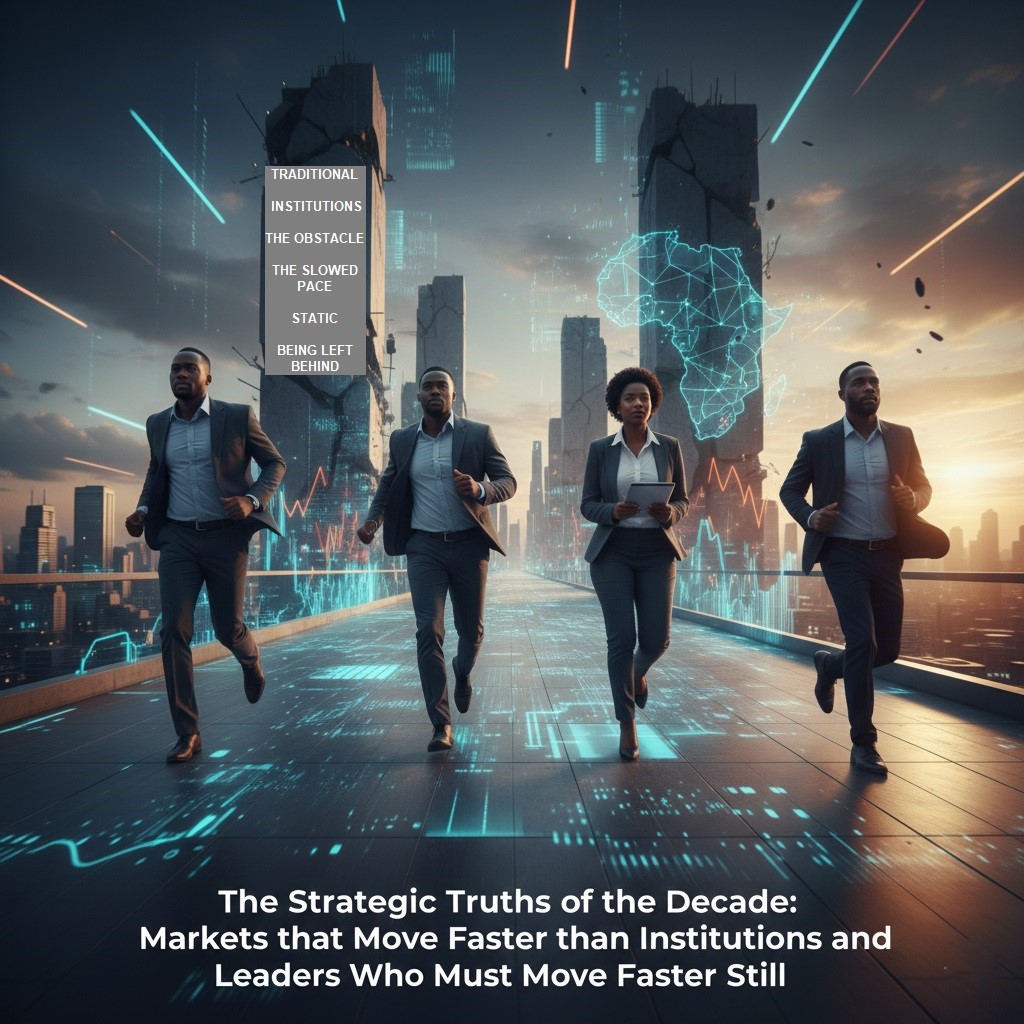
The most difficult challenge for African commerce is not the scarcity of opportunities but the scarcity of leaders who can interpret opportunity at the correct altitude. Market volatility is not a threat in itself; it is a filter that exposes leaders who rely on outdated playbooks, fragmented intelligence streams, and shallow organisational insight. Why do so many companies fail to scale in high-growth African markets, even when the demand fundamentals are unmistakably favourable? The answer lies in leadership failures of interpretation rather than failure of potential. A leader who cannot read the deeper economic signals cannot command the trajectory of their enterprise. It is therefore essential to understand that the African commercial environment rewards leaders who combine institutional clarity with structural boldness and operational sophistication.
The future belongs to those who can marry local insight with global capability, who can build brands that outgrow their categories, and who can deploy AI systems that enhance organisational memory, predictive capacity, and decision speed. This is not a theoretical ambition but an operational imperative. The most competitive organisations of the next decade will be those that recognise that intelligence creation is the new engine of value, and that leadership must evolve from stewardship to strategic authorship. In a continent where uncertainty is the only certainty, the premium lies not in caution but in calculated strategic momentum.
The Continental Reality Check: Africa’s Strategic Inflection Point and the New Rules of Competitive Power
Africa enters the next decade with the youngest population in the world, an expanding urban class, rising digital adoption, and growing continental integration through the African Continental Free Trade Area. Yet none of these structural advantages will matter if leadership remains reactive and fragmented. Demographics only become destiny when guided by conviction, competence, and creativity. This is the continental inflection point that most observers underestimate. Africa is not merely competing with itself. Africa is competing with a world that is accelerating at unprecedented speed. The nations and companies that will rise are those that treat strategic foresight as a discipline rather than a luxury.
The question therefore stands. What prevents African enterprises from becoming global market shapers rather than territorial participants? The answer lies in leadership that is often too hesitant, branding that is too cautious, and technological adoption that is too incremental. The next decade will not reward incrementalism. It will reward those who structure their organisations for intelligence-driven growth, those who build brands capable of shaping consumer culture at a continental scale, and those who anchor their leadership models in strategic audacity.
In conversations with senior executives across Johannesburg, Nairobi, Lagos, London, Dubai, and Singapore, one theme emerged repeatedly. The future belongs to companies that operate with institutional boldness grounded in analytical discipline. These leaders know the stakes. They understand that the African enterprise must think globally, act technologically, and compete psychologically. Only then will authority become an advantage.
Strategic Leadership Reimagined: Vision as Currency, Foresight as Infrastructure

A decade ago, strategic leadership in Africa was defined by stability management. Today, it is defined by anticipation, velocity, and intellectual fluency. The modern leader must read continental trends with the acuity of an economist, interpret geopolitical dynamics with the insight of a strategist, and convert organisational complexity into competitive clarity. This raises a provocative question. Are African leaders prepared for a world in which the pace of change outstrips the pace of comprehension? The executives who rise to the challenge will be those who cultivate the discipline to rethink their organisations as systems of intelligence rather than systems of administration.
A South African telecommunications client offers a compelling illustration. The company confronted stagnant growth despite a wide retail footprint. The leadership team invited a strategic intervention that restructured its entire market intelligence process. Instead of relying on quarterly reports, the company integrated predictive analytics into every operational tier, redesigned its commercial decision-making cycle, and deployed intelligent customer segmentation across its provinces. The transformation elevated the organisation from a reactive defender to an anticipatory leader. Within eighteen months, the company expanded its market share, heightened customer retention, and repositioned itself as a category architect rather than a category participant.
The deeper lesson for African and global executives is simple. Strategic leadership is no longer a philosophical concept. It is a technical discipline. Leaders who master it will define industries. Leaders who ignore it will dissolve into irrelevance.
Brand Dominance as a Strategic Instrument for Cultural Power, Consumer Trust, and Continental Influence: The Enterprise That Understands Culture Commands Markets
Brand strength will become one of the most decisive levers of African economic ascendancy because it signals credibility, commands loyalty, and creates psychological ownership over consumer choice. Yet why do so few African brands achieve continental or global resonance despite vast cultural capital and deep reservoirs of narrative power? The answer is that most brands communicate but do not imprint, they speak but do not shape, they promote but do not dominate.
True brand dominance requires an interrogation of cultural memory, behavioural nuance, and socio-economic aspiration. It also requires companies to build brands that act as institutional storytellers rather than marketing assets. Brands must evolve into civic actors that can interpret the anxieties, ambitions, and emotional rhythms of their markets. When a brand understands culture with precision, it becomes an economic force. When it understands culture with foresight, it becomes a geopolitical force. For African companies operating across diverse cultural terrains, the real question is not how to create visibility but how to create inevitability. Visibility invites attention, inevitability commands allegiance. And in the next decade, the enterprises that command allegiance will set the commercial terms for everyone else.
Too many African organisations treat branding as a marketing exercise rather than an economic force. In reality, brand dominance is the single most underestimated driver of African competitiveness. A powerful brand is a national asset, an economic engine, and a cultural signal. The pressing question becomes stark. Why should African consumers trust foreign brands more than local ones? Trust is not a natural phenomenon. Trust is an engineered outcome created through consistency, memory, and meaning.
Consider the case of a South African food and beverage group that confronted declining relevance among younger consumers. Rather than pursue cosmetic changes, the organisation embarked on a deep cultural realignment that reinterpreted its brand identity as a celebration of local creativity, culinary mastery, and social heritage. The company repositioned its products, restructured its storytelling, redesigned its packaging, and activated a vast influencer ecosystem across the townships and metropolitan centres. The result was a substantive increase in brand affinity and category dominance. This illustrates a critical truth. Brands that reflect the cultural pulse of their societies command loyalty that foreign competitors cannot replicate.
For global corporations, the implications are equally profound. African markets reward brands that demonstrate cultural humility, local insight, and contextual intelligence. Marrakesh, Cape Town, Accra, Kigali, and Lagos are not monolithic markets. They are distinct cultural landscapes that require brands to operate with sensitivity and strategic nuance. The future belongs to those who understand the psychology of trust as deeply as the mechanics of commerce.
Artificial Intelligence as the New Power Infrastructure: Intelligent Commerce as Africa’s Moment of Asymmetric Advantage

Artificial intelligence will not merely modernise African commerce; it will reconfigure its competitive logic. Too many global observers underestimate the continent’s capacity to leapfrog legacy inefficiencies and to deploy AI in ways that more mature markets cannot. This is Africa’s asymmetry, and it is one of its greatest advantages. Why should a continent still building parts of its infrastructure not use this moment to build intelligence systems that outperform those of older economies?
The African challenge has always been infrastructural gaps, yet the African opportunity lies in the ability to construct intelligent systems without the constraints of obsolete architecture. This is not a continent that must react; it is a continent that can design. From municipal governance to predictive agriculture, from credit risk modelling to supply chain resilience, AI will give African enterprises the tools to diagnose problems before they manifest and to scale solutions before competitors even detect the opportunity.
The leadership question, therefore, becomes unavoidable. Who will build the intelligence infrastructure that defines Africa’s commercial destiny? The organisations that take this question seriously will define the next decade of continental influence.
Artificial intelligence has accelerated from conceptual novelty to existential necessity. It is the most powerful driver of commercial transformation in modern history. The critical question confronting African and global leaders is this. Who will seize the intelligence advantage, and who will watch their industries being reshaped by others? True competitiveness now depends on the capacity to embed intelligence across the entire value chain. This is no longer a technical challenge. It is a strategic imperative.
A Kenyan agritech organisation provides a compelling case. The company sought to address food insecurity and smallholder farmer inefficiency. By integrating AI-driven soil analytics, predictive crop modelling, and real-time weather optimisation into its platform, the company elevated yields, reduced input waste, and expanded cross-border agricultural trade. South African retailers and financial institutions have begun exploring similar models. The underlying principle is undeniable. AI is the most effective mechanism for accelerating African productivity in sectors historically constrained by infrastructure, fragmentation, and cost.
Globally, companies that transform their decision-making architectures through intelligent systems are outperforming their peers. AI is not merely an efficiency enhancer. It is the foundation of twenty-first-century commercial power. Leaders who fail to embrace this reality will discover that their competitors have quietly rewritten the rules of their industries.
Organoid Intelligence and the Cognitive Frontier: The Next Leap in Computational Power
While AI defines the present, a new frontier is emerging. Organoid Intelligence has the potential to transform computation through biological processing that mimics the human brain. The question facing forward-looking leaders is stark. What happens when computation becomes capable of learning, adapting, and evolving at a biological scale? The implications for African commerce are immense. Organisations that prepare for this frontier will be positioned to lead the next wave of global technological transformation.
Although early in development, Organoid Intelligence offers the possibility of personalised medicine, advanced robotics, autonomous supply chain optimisation, and hyper-adaptive manufacturing systems. South African universities and continental research centres are well-positioned to contribute to this emerging field. Leaders must begin building internal capability, establishing partnerships, and cultivating specialised talent to ensure that Africa does not miss this coming wave of cognitive advancement.
The next decade will belong to those who anticipate the frontier rather than react to it.
The African Enterprise of the Future: The Rise of Continental Champions that Usher Institutions which Think, Learn, Interpret and Act

The African enterprise of the next decade will not be defined by size, age, or category. It will be defined by intelligence density, strategic imagination, operational agility, and cultural acuity. It will be defined by leaders who can convert data into foresight, complexity into clarity, and uncertainty into competitive advantage. It will be defined by companies that master not only what their markets want but what their markets are becoming.
The African enterprise of the future will design continent-scale strategies from local nuance, will convert cultural intelligence into commercial power, and will leverage AI to eliminate operational entropy. It will be an enterprise that moves faster than its environment, thinks deeper than its rivals, and scales broader than its history. The decisive question for every leader is therefore unavoidable. Will your organisation be shaped by the future, or will it shape the future for everyone else?
The African enterprise of the future will not resemble the African enterprise of the past. It will be structurally intelligent, culturally resonant, continentally integrated, globally competitive, and strategically fearless. It is important to ask a provocative question. Which African companies will rise to the level of global champions capable of influencing policy, shaping industries, and defining culture? The answer lies in organisations that embrace continental identity, technological sophistication, and strategic discipline.
A South African financial services company recently restructured its operating model to centralise intelligence, diversify revenue streams, and embed scenario planning into its strategic cycle. The organisation expanded into new African markets, designed digital financial products tailored for rural consumer behaviour, and improved its exposure to global capital markets. This illustrates a broader principle. African companies that operate with institutional seriousness can command influence beyond their domestic borders.
Global corporations seeking entry into Africa must adopt a partnership-based approach rather than a purely extractive model. The future of African commerce is collaborative, technologically enabled, and structurally ambitious. Those who recognise this will secure a definitive advantage.
The Implementation Playbook for Converting Strategic Intelligence into African and Global Advantage: Practical Solutions for Leaders Who Demand Impact
The true test of strategic insight is its translation into disciplined action. The African enterprise that aspires to continental influence must convert narrative aspiration into operational execution. It is therefore essential to extract practical solutions from the case studies and strategic ideas presented earlier. These solutions provide a roadmap for leaders who refuse to allow complexity, uncertainty, or institutional inertia to restrict their ambition.
Cinematic Transition into the Playbook, Brief and Inevitable
The analysis concludes, the evidence stands visible, and the invitation is clear. The question now is operational. How does an organisation institutionalise the qualities that will define the next decade? The following six solutions are designed for immediate adoption at the board and executive level. Each solution is an integrated set of decisions, capability investments, and governance reforms that together convert strategic authority into measurable advantage.
Solution One: Rebuild the Intelligence Cycle for Continental Scale Competitiveness
The first solution emerges from the South African telecommunications case. Leaders must redesign their intelligence cycle by replacing static quarterly reporting with dynamic, always-on monitoring systems that integrate predictive modelling into every functional tier. Leaders must redesign organisational intelligence from the ground up, so that it becomes an operational muscle rather than an episodic report. They must centralise data assets, unify customer insight systems, and deploy predictive analytics that reveal patterns invisible to manual interpretation. They must establish multidisciplinary intelligence councils that integrate behavioural economists, data scientists, cultural analysts, supply chain strategists, and policy specialists. They must operationalise these councils as permanent engines of decision clarity. They must translate intelligence outputs into service redesign, market expansion strategies, and real-time product optimisation.
Leaders must replicate the demonstrable success achieved by the South African telecommunications case and treat intelligence not as reporting but as a competitive capability. They must build intelligence systems that anticipate market movements and shape executive action at a continental scale. Implement sprint cycles that convert insight into action within a single quarter. These steps will convert anticipation into repeated competitive advantage and replicate the practical gains observed in the South African telecommunications example.
Solution Two: Strengthen Brand Authority through Cultural Mastery and Influence Ecosystems
The second solution arises from the food and beverage brand transformation case. Executives must deepen brand authority by aligning brand identity with cultural truth. Senior leaders should begin with a complete and rigorous cultural audit that identifies consumer rituals, linguistic nuance, social hierarchies, what consumers value, what they fear, what they celebrate and what they aspire toward. This must be done across targeted markets. They must then translate these insights into concrete actions that redesign packaging, tone of voice, product architecture and retail experiences in ways that resonate with local identity. They must invest in the construction of influence ecosystems built on partnerships with creators, communities and cultural institutions. They must emulate the food and beverage case by transforming cultural intelligence into market share. They must build brands that do not seek attention but command allegiance. They must construct brand architectures that operate as long-term levers of strategic authority.
Track brand health through culture-sensitive metrics and shift investment to content, collaboration and presence that build habitual allegiance. These steps will make brand affinity durable and transform marketing expenditure into a long-term strategic asset. These ecosystems will anchor brand trust in ways that foreign competitors cannot match. Any company that follows these steps will see brand affinity rise because cultural intelligence becomes a commercial asset rather than a marketing accessory.
Solution Three: Scale Productivity through AI-Driven Operations and Predictive Supply Chains
The third solution is drawn from the Kenyan agritech example. Leaders must scale productivity through AI-embedded operational systems. This requires the establishment of digital extension services that support customers in real time through mobile platforms, intelligent advisory tools and automated diagnostics. It also demands that organisations use predictive analytics to optimise their supply chains, reduce waste and forecast demand.
Finally, leaders should form cross-border strategic alliances that link markets, share knowledge and expand reach. Prioritise modular, API first architectures that permit rapid integration of third-party capabilities and iterative improvement. The result is a new architecture of continental productivity built on intelligence rather than on raw scale. Executives must adopt the Kenyan agritech approach and convert predictive capability into stability, resilience, and scaled commercial growth. They must build operations that learn, adapt, and self-optimise. These measures turn predictive capability into supply chain resilience and scale.
Solution Four: Institutionalise Scenario Planning and Multi-Horizon Strategy as Core Leadership Disciplines
The fourth solution comes from the experience of financial institutions that have restructured their strategic architecture. Senior executives must institutionalise scenario planning as a permanent, non-negotiable leadership discipline. They must deploy AI-assisted foresight models and diversify revenue streams to reduce dependency on domestic volatility. They must develop multi-horizon strategies that examine and anticipate technological shifts, regulatory changes, political inflection points, immediate risks, medium-term opportunities and long-term structural trends simultaneously.
Leaders must replicate the aforementioned financial institution example by aligning economic modelling with behavioural insights and designing digitally enabled products that anticipate rather than react to consumer psychology. They must create product roadmaps that map to short-term monetisation, medium-term scaling, and long-term structural transformation. Embed strategic stress tests that measure organisational resilience against plausible systemic shocks. These disciplines will align capital allocation with a long runway advantage. These steps will enable African financial institutions to command regional influence and global respect.
Solution Five: Redesign Global Entry Strategies for Ethical, Locally Grounded, High Impact Growth
The fifth solution applies to global corporations entering African markets. Global corporations must adopt partnership-based market entry, invest in local research, develop regional manufacturing capacity, and integrate African suppliers into global value chains. They must prioritise transparency, build public trust, and treat African markets as co-creators rather than passive recipients. They must construct local capability rather than extract local value. They must treat Africa not as an opportunity but as a strategic imperative. They must operate with a clarity that positions them as long-term contributors to the continent’s economic advancement.
Global multinationals entering African markets must structure joint ventures that transfer capability, not merely revenue. Use shared value metrics to evaluate impact and commercial returns, and link executive incentives to long-term, locally measured outcomes. This orientation secures trust, reduces political risk, and converts market entry into mutually reinforcing growth. The corporations that embrace these principles will secure trust-based commercial longevity.
Solution Six: Build Institutions that Think, Learn, Interpret and Act at Velocity
The final solution speaks to every leader reading this manifesto. They must embed intelligence into the very fabric of their organisations. This is not an optional exercise. It is a structural imperative. Leaders must professionalise strategic thinking, elevate analytical capability, and redesign governance around speed and clarity. They must cultivate organisational cultures that reward intellectual audacity, bold interpretation, disciplined and decisive execution, disciplined experimentation, rapid learning, and generative creativity. They must build decision architectures that minimise noise and maximise organisational acuity. They must translate intelligence into authority and authority into advantage. They must construct institutions capable of moving with coherence, conviction, and strategic rhythm.
These actions align organisational architecture with the tempo of contemporary markets and ensure leadership is convertible into a durable advantage. These strategies and tactical actions will determine whether African enterprises become continental champions or regional observers. They will also decide whether global corporations establish enduring footholds or repeat the failures of earlier market cycles.
Only those who convert insight into implementation will shape the next decade of African commerce
.
The Leadership Imperative: Authority Without Advantage Is Irrelevant, The Decade Will Belong to the Leaders Who Decide It Will
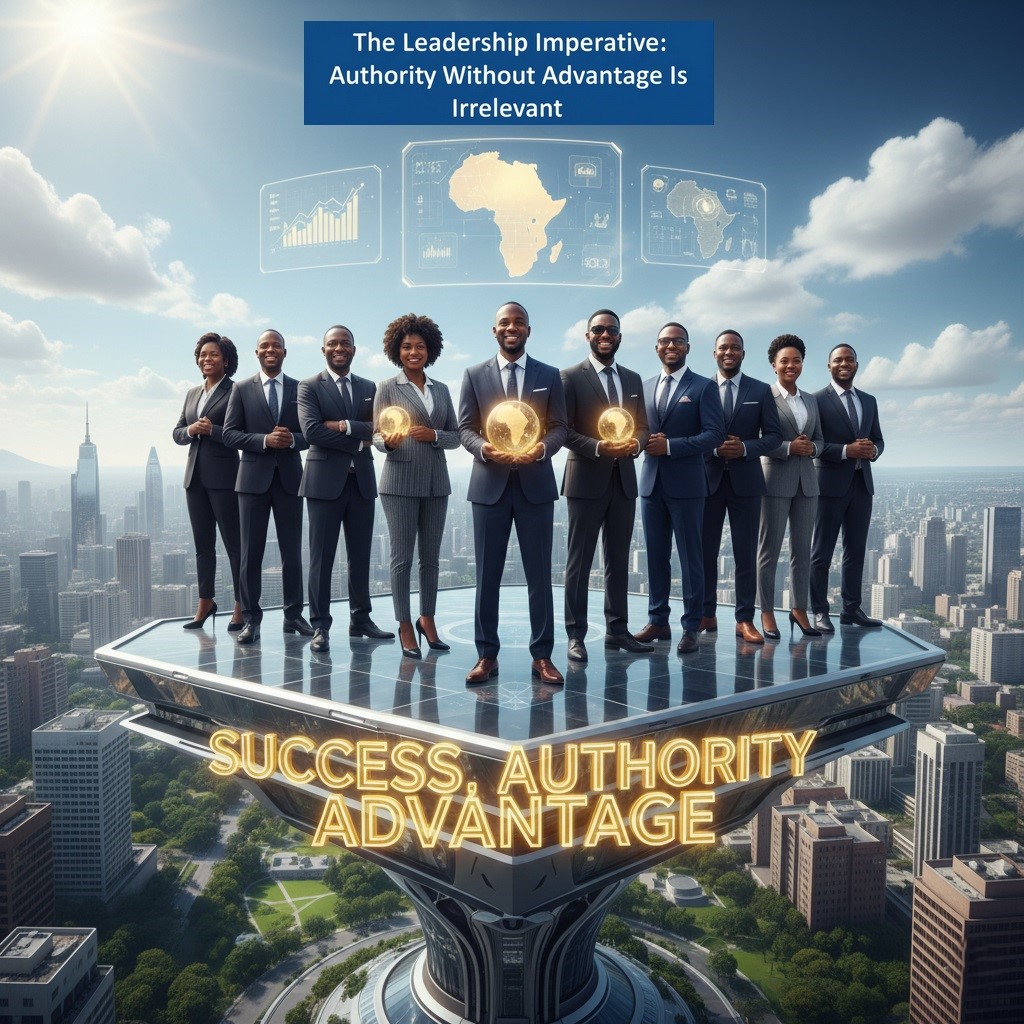
Leaders across Africa and the world must confront a simple truth. Authority without advantage is irrelevant. The next decade demands leaders who are willing to think sharply, act decisively, and build institutions that can withstand complexity. This manifesto is not a prediction. It is a provocation. It is a strategic summons to those who recognise that the world is entering an era defined by intelligence, culture, and courage. Those who answer this summons will shape the destiny of the continent.
The African century will not be inherited. It will be constructed.
A Call for Continental Ambition and Global Discipline: The Final Challenge to the Leaders Who Will Shape the Next Decade
If you are a chief executive, a billionaire, a policymaker, or a senior academic, the question that now confronts you is not whether Africa will rise. The question is whether you will rise with it and whether you possess the ambition and discipline to redefine your institution for a world that rewards intelligence, vision, and cultural depth. The next decade will be shaped by those who convert authority into advantage with precision, those who build brands that command loyalty, and those who wield artificial and biological intelligence with strategic mastery. The time for hesitant leadership has expired. The time for decisive transformation has arrived. The leaders who embrace this moment will not merely endure the future. They will author it.
Images by Bandile Ndzishe of Bandzishe Group
About bandile ndzishe

Bandile Ndzishe is the CEO, Founder, and Global Consulting CMO of Bandzishe Group, a premier global consulting firm distinguished for pioneering strategic marketing innovations and driving transformative market solutions worldwide. He holds three business administration degrees: an MBA, a Bachelor of Science in Business Administration, and an Associate of Science in Business Administration.
With over 29 years of hands-on expertise in marketing strategy, Bandile is recognised as a leading authority across the trifecta of Strategic Marketing, Daily Marketing Management, and Digital Marketing. He is also recognised as a prolific growth driver and a seasoned CMO-level marketer.
Bandile has earned a strong reputation for delivering strategic marketing and management services that guarantee measurable business results. His proven ability to drive growth and consistently achieve impactful outcomes has established him as a well-respected figure in the industry.
As an AI-empowered and an AI-powered marketer, I bring two distinct strengths to the table: empowered by AI to achieve my marketing goals more effectively, whilst leveraging AI as a tool to enhance my marketing efforts to deliver the desired growth results. My professional focus resides at the nexus of artificial intelligence and strategic marketing, where I explore the profound and enduring synergy between algorithmic intelligence and market engagement.
Rather than pursuing ephemeral trends, I examine the fundamental tenets of cognitive augmentation within marketing paradigms. I analyse how AI's capacity for predictive analytics, bespoke personalisation, and autonomous optimisation precipitates a transformative evolution in consumer interaction and brand stewardship. By extension, I seek to comprehend the strategic applications of artificial intelligence in empowering human capability and fostering innovation for sustainable societal advancement.
In essence, I explore how AI augments human decision-making in both marketing and other domains of life. This is not merely an interest in technological novelty, but a rigorous investigation into the strategic implications of AI's integration into the contemporary principles of marketing practice and its potential to reshape decision-making frameworks, enhance strategic foresight, and influence outcomes in diverse areas beyond the marketing sphere.