
In the volatile theatre of twenty-first-century enterprise, acquiring a customer may feel like a victory, but retaining them defines the empire. For nearly three decades, I have navigated the shifting tides of global commerce as a Global Consulting Chief Marketing Officer (CMO) and Senior Marketing Executive, sharpening an arsenal forged in the Trifecta of Strategic Marketing, Daily Marketing Management, and Digital Marketing. The imperative is clear: acquisition fuels growth, but retention sustains it. And yet, what precisely does it take to orchestrate both, in unison, with elegance and ruthless efficacy? That is the central riddle that occupies not only the marketing suite, but the strategic boardrooms of the world's most powerful institutions.
In this treatise, I lay bare the strategic mechanisms that I deploy to attract and anchor customer loyalty, not as passing encounters, but as long-term relationships of reciprocal value. These strategies are not ephemeral marketing tactics, but deeply rooted frameworks of intelligent customer orchestration – the kind demanded by CEOs, Tech Billionaires, World Leaders, and C-suite Executives alike.
Foundational Principle: Trust is the New Currency for Achieving Precision-Guided Growth Through Strategic Marketing Mastery
Before any tactic, the strategic bedrock is trust. Not manufactured trust, but earned trust, cultivated through relevance, consistency, and transparency across all touchpoints. Both acquisition and retention strategies must echo this singular aim: to make the organisation not only visible but indispensable in the customer’s mental ecosystem. This facilitates precision-guided growth achieved through strategic marketing mastery.
Customer acquisition and retention are not sequential marketing exercises, they are concurrent, strategic imperatives that must be orchestrated with surgical precision and enduring resonance. In the contemporary commercial environment, shaped by algorithmic attention, expectation inflation, and fleeting brand loyalty, businesses that do not operate with both relentless agility and deliberate emotional intelligence risk fading into irrelevance.
Customer acquisition and retention demand a sophisticated understanding of market dynamics and consumer psychology that extends far beyond rudimentary promotional tactics. My approach centres upon establishing what I term "cognitive monopoly" – positioning one's enterprise as the definitive authority within a specific domain through demonstrable expertise and unparalleled value delivery.
Begin with Strategic Clarity: Understand Before You Pursue
Strategy is not a slogan; it is a lethal filter for decision-making. Is your customer acquisition strategy built upon noise or necessity? The most fatal error among even otherwise competent leadership is to conflate busyness with strategic motion. In my practice, the first rule is strategic clarity – not merely defining the target audience but deeply understanding their hidden psychographics, unmet needs, and unspoken anxieties. This is where Strategic Marketing moves beyond demographics and enters the terrain of behavioural intelligence and motivational architectures. Before a single campaign is launched, we ask: what ecosystem of value does the customer truly inhabit – and how can we enter that ecosystem not as advertisers, but as indispensable co-creators?
Consider Discovery Bank in South Africa – a digital-native financial platform that did not merely acquire customers through gimmickry, but designed an ecosystem where behavioural incentives were aligned with financial well-being. Their strategic clarity enabled them to acquire customers by solving for relevance at the level of lifestyle – not merely banking. This is what modern acquisition must resemble: ecosystemic relevance, not product-centric broadcast.
Design Demand, Don’t Chase It: Customer Acquisition Through Intelligent Positioning
Outposition, don’t outshout. This is the era of intellectual acquisition. Does your brand create demand by provoking thought or by exhausting attention? Today’s elite customer is neither passive nor ignorant – they are sophisticated, connected, and oversaturated. I have long abandoned the archaic pursuit of "eyeballs" in favour of intellectual positioning – the capacity to provoke, educate, and ultimately reframe the customer’s understanding of their own needs. Intelligent positioning means seizing the narrative and becoming the authoritative voice in a niche, not just a product among many.
In practice, I deploy high-impact Thought Leadership content ecosystems that are fuelled by digital precision, layered into psychographic targeting, and guided by strategic storytelling. In one case, working with a Pan-African SaaS enterprise, we reversed stagnant acquisition rates by overhauling the firm's positioning – we moved from selling "software" to selling "competitive advantage". Within three quarters, acquisition velocity increased by 37% – not because we increased ad spend, but because we redefined what the product meant in the mind of the prospect.
Elite acquisition is not about reach – it is about resonance.
Operational Excellence Is Not Optional: Scale Through Process Precision

Consistency is credibility built through processes that mirror your promises. What good is a promise made at the top of the funnel if the bottom collapses under operational incoherence? One of the most underestimated levers of customer acquisition is the consistency of your internal systems. Daily Marketing Management, in my experience, is the crucible where credibility is either forged or fractured. It encompasses campaign execution, lead nurturing workflows, CRM integration, and data discipline – all orchestrated not as chaos, but as a choreography.
One cannot attract and retain customers at scale if the operational foundation is shaky. This is particularly true in emerging markets, where infrastructural complexity intersects with consumer scepticism. Take the case of Capitec Bank, another South African example – their rapid rise among the banking elite was undergirded not just by affordability, but by operational excellence in service delivery, digital onboarding, and customer education.
In my own practice, I embed Six Sigma and Agile Marketing methodologies to ensure that campaigns are not only launched but also continuously iterated based on real-time data. Acquisition, I argue, is not an event – it is a consequence of operational integrity.
Customer Acquisition: Precision, Magnetism, and Predictive Intelligence
For acquisition through precision, magnetism, and predictive intelligence, I advocate leveraging asymmetric channels that competitors overlook or underutilise. Rather than competing in saturated advertising spaces, I focus on building proprietary distribution networks – cultivating strategic partnerships with complementary businesses, developing thought leadership platforms that attract high-intent prospects organically, and creating what Seth Godin aptly describes as "permission marketing" systems. The objective is to construct acquisition mechanisms that become increasingly efficient over time, rather than those requiring perpetual investment escalation.
Content-led acquisition proves particularly efficacious when executed with intellectual rigour. I develop comprehensive educational frameworks that address genuine customer challenges whilst subtly demonstrating our superior capabilities. This approach transforms the sales process from adversarial persuasion into collaborative problem-solving, attracting clients who arrive pre-qualified and predisposed to engagement.
The strategies I employ are neither gimmicks nor platitudes; they are drawn from the hard-earned lessons of market dynamics, behavioural economics, and high-stakes brand stewardship.
Here are some of the specific customer acquisition strategies in my arsenal:
1. Define and Dominate a Micro-Niche: Rather than chase mass-market awareness, I stake intellectual and emotional authority within a hyper-specific niche. In saturated sectors, relevance trumps volume. This involves crafting laser-focused value propositions and content strategies tailored to the nuanced challenges of that cohort. You win by being unignorably specific.
2. Deploy a Full-Funnel Content Strategy: Customer journeys are no longer linear. As such, acquisition efforts must serve content across awareness, consideration, and decision stages, each touchpoint delivering intellectual value, not marketing fluff. The goal is not merely to be seen, but to be relied upon as a source of clarity and strategic foresight.
3. Leverage Performance Marketing with Strategic Restraint: Paid media – social, search, programmatic – must serve a measurable business objective, not vanity metrics. I advocate for data-driven experimentation: A/B testing landing pages, ad creatives, and conversion flows while aligning tightly with ROI, not CPM. Intelligence, not spend, is the multiplier.
4. Engineer Referral and Advocacy Loops: Every new customer should be viewed as a vector of growth. Thus, I establish referral incentives and micro-influencer partnerships, not gimmicks, but thoughtful programmes that reward aligned behaviour and amplify earned media.
5. Intelligent Onboarding and Conversion Friction Removal: Many organisations lose prospects at the threshold. I obsessively optimise sign-up, checkout, or consultation flows, ensuring the path to first value is seamless, quick, and affirming. First impressions in digital ecosystems are strategic leverage points, not administrative hurdles.
Digital Marketing as Command and Control for Acquisition and Retention: Mastering Precision at Scale
Algorithms and Archetypes converge where technology meets human understanding. Is your digital presence a marketing channel or a strategic command centre? Too often, digital marketing is treated as a necessary expense, rather than a decisive battlefield. My approach, refined over three decades, is to weaponise Digital Marketing as a command-and-control function, where data, customer psychology, and machine learning converge to deliver hyper-personalised journeys.
At the centre of this strategy lies AI-enabled segmentation, behavioural analytics, and predictive content mapping. This is not theory – this is proven in the real-world. For instance, I recently led a campaign for a global automotive client in which we used agentic AI tools to detect micro-conversions and adjust the customer journey in real-time, resulting in a 21% uplift in conversion rates within eight weeks.
Digital is no longer about presence – it is about intelligent orchestration. Those who fail to master it will be outmanoeuvred by those who do.
Retention as Revenue Strategy: Loyalty Beyond Discounts
I aim for emotional contracts, not transactions. This is the psychology of enduring engagement. What transforms a one-time buyer into a lifelong customer? The answer is neither points nor promotions; it is emotional anchoring. Retention is not merely a metric – it is a philosophy that elevates the customer from a consumer to a co-owner of brand value. In my work, I design retention strategies based on community, education, and identity, enabling customers to see their own aspirations reflected in the brand's evolving journey.
South Africa’s Woolworths Food division has done this with masterful precision, creating a retention ecosystem based on quality assurance, sustainable sourcing, and lifestyle alignment. Their customers do not merely shop – they participate in an ethical consumption experience. I have replicated such models in other sectors, embedding retention metrics such as Lifetime Value (LTV), Net Promoter Score (NPS), and Customer Health Scores into executive dashboards.
Retention, when correctly understood, is not about keeping customers – it is about deepening your relevance over time.
Customer Retention: Strategic Intimacy, Value Resonance, and Psychological Tenure

Retention represents the true crucible of commercial excellence. To achieve it, I implement what I call "progressive value revelation" – systematically expanding the breadth and depth of value delivery once initial trust is established. This involves continuous service evolution, proactive problem anticipation, and creating switching costs through deep integration rather than contractual constraints.
Most critically, I obsess over the experiential architecture surrounding every customer touchpoint. Each interaction must reinforce the customer's decision-making astuteness whilst deepening their investment in our shared success. This psychological positioning transforms customers into advocates, creating compound growth effects that traditional marketing approaches simply cannot replicate.
Here are my specific and actionable customer retention strategies:
1. Architect a Customer Success Function, not just a service desk: To retain a customer is not to keep them “satisfied”; it is to constantly engineer new relevance in their journey. I deploy proactive customer success metrics, usage data, and milestone tracking to deliver delight, resolution, and foresight – all before a support ticket is ever logged.
2. Personalisation Engines at the Core of CX: Retention is driven by felt understanding. I integrate personalisation logic across email, app, and web channels, ensuring that each customer experiences a tailored, anticipatory journey. Modern loyalty is algorithmically fuelled and emotionally affirmed.
3. Feedback as a Strategic Asset: Too many brands treat customer feedback as compliance noise. I treat it as strategic intelligence. I institutionalise mechanisms (surveys, interviews, NPS loops) that surface insight and broadcast visible responses. When customers feel heard and actioned, they rarely stray.
4. Exclusive Ecosystems and Membership Models: Retention thrives when customers feel they belong to a curated inner circle. I design tiered access, loyalty perks, and knowledge communities that reward tenure, not just transactions. The aim is to convert users into brand citizens.
5. Predictive Churn Modelling: Finally, I invest in churn risk analytics, using behavioural signals (e.g. log-in frequency, feature usage decline, sentiment analysis) to pre-empt attrition. Retention is not a reactive exercise; it is a statistical discipline disguised as empathy.
The CMO as Architect of Customer Destiny: Strategic Marketing as Enterprise Stewardship
From function to philosophy, my marketing efforts serve as the custodian of strategic futures. Are CMOs merely campaign managers or are they the strategic stewards of the customer enterprise? My position is unambiguous: the modern CMO must be the architect of customer destiny, integrating the disciplines of Strategic Marketing, Daily Marketing Management, and Digital Marketing into a singular, cohesive command centre. This role demands not only tactical competence, but also philosophical foresight – the ability to interpret market signals, foresee inflection points, and shape brand narratives accordingly.
From advising multi-billion-dollar conglomerates to mentoring scale-ups across Africa, I have witnessed one truth repeatedly affirmed – where marketing leadership is weak, customer destiny is vulnerable. Where marketing is elevated to strategic stewardship, brands do not merely survive – they define categories.
If we do not architect customer futures, who will?
Strategic Integration: The Flywheel Effect
None of these strategies operates in isolation. The real power emerges when acquisition and retention are looped into a unified growth flywheel, where every new customer feeds a data and referral engine, and every loyal customer becomes a compounder of brand equity.
This is not marketing as messaging; it is marketing as a system.
Acquisition Wins Attention. Retention Builds Empires.
The most durable businesses of the next decade will not be those who simply attract the most eyeballs; they will be those who command the deepest trust, deliver the most intelligent relevance, and create a brand experience that feels less like a transaction and more like a strategic partnership.
My approach, therefore, is simple in philosophy but complex in execution: Acquire through precision. Retain through intimacy. Scale through systemisation.
This is how category leaders are built. This is how loyalty becomes inevitability.
From Insight to Implementation – The Final Challenge to Leadership
Strategic orchestration is a choice: Will you merely react, or architect? The strategies I have shared are not theoretical luxuries – they are imperatives for any enterprise wishing to thrive in a world of infinite choice and limited attention. Acquisition and retention are no longer linear tasks, but multidimensional orchestral movements – requiring CMOs and CEOs alike to conduct, adapt, and elevate.
I challenge you, the reader – whether you lead a nation, a unicorn, or a Fortune 500 titan – to internalise this truth: customer value is not captured, it is co-created. And it is only co-created when marketing is reimagined as the central nervous system of your entire organisation.
The question is not whether you will acquire and retain customers, but whether you will do so by design or by accident. And if by design, what calibre of design will you dare to lead with?
Let us not settle for incrementalism when orchestration is within reach. The era of intelligent marketing leadership has arrived, will you rise to meet it?
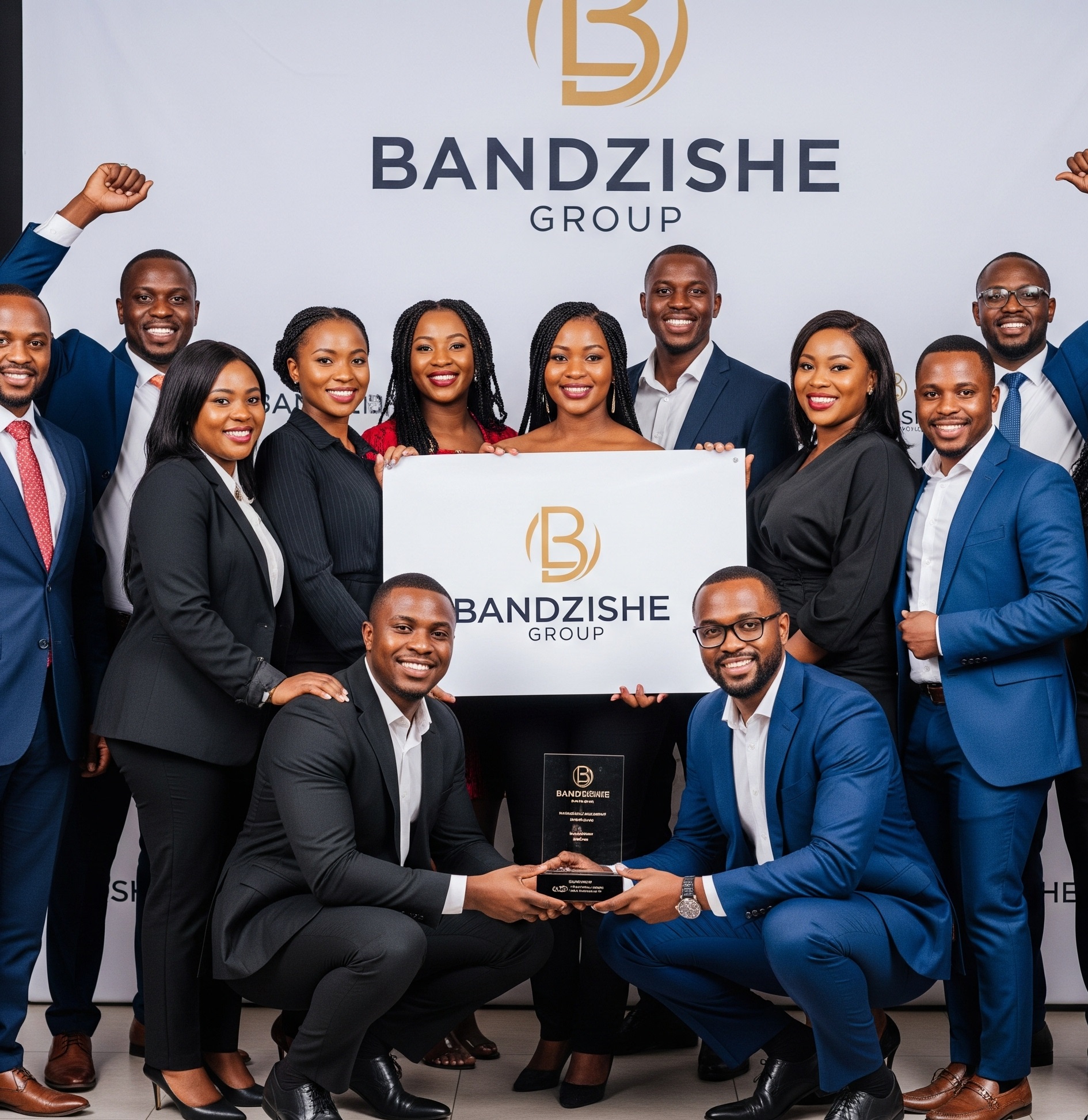
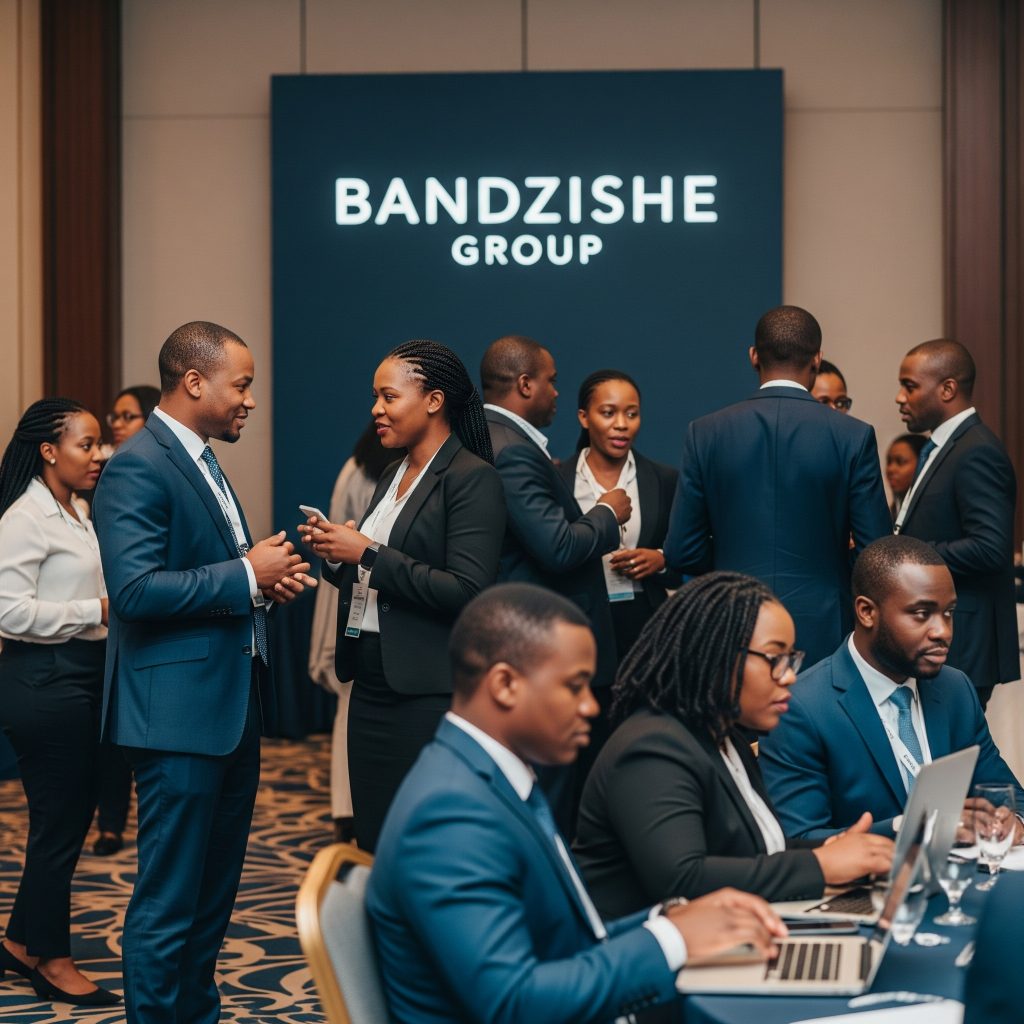
Images by Bandile Ndzishe of Bandzishe Group
About bandile ndzishe

Bandile Ndzishe is the CEO, Founder, and Global Consulting CMO of Bandzishe Group, a premier global consulting firm distinguished for pioneering strategic marketing innovations and driving transformative market solutions worldwide. He holds three business administration degrees: an MBA, a Bachelor of Science in Business Administration, and an Associate of Science in Business Administration.
With over 29 years of hands-on expertise in marketing strategy, Bandile is recognised as a leading authority across the trifecta of Strategic Marketing, Daily Marketing Management, and Digital Marketing. He is also recognised as a prolific growth driver and a seasoned CMO-level marketer.
Bandile has earned a strong reputation for delivering strategic marketing and management services that guarantee measurable business results. His proven ability to drive growth and consistently achieve impactful outcomes has established him as a well-respected figure in the industry.
As an AI-empowered and an AI-powered marketer, I bring two distinct strengths to the table: empowered by AI to achieve my marketing goals more effectively, whilst leveraging AI as a tool to enhance my marketing efforts to deliver the desired growth results. My professional focus resides at the nexus of artificial intelligence and strategic marketing, where I explore the profound and enduring synergy between algorithmic intelligence and market engagement.
Rather than pursuing ephemeral trends, I examine the fundamental tenets of cognitive augmentation within marketing paradigms. I analyse how AI's capacity for predictive analytics, bespoke personalisation, and autonomous optimisation precipitates a transformative evolution in consumer interaction and brand stewardship. By extension, I seek to comprehend the strategic applications of artificial intelligence in empowering human capability and fostering innovation for sustainable societal advancement.
In essence, I explore how AI augments human decision-making in both marketing and other domains of life. This is not merely an interest in technological novelty, but a rigorous investigation into the strategic implications of AI's integration into the contemporary principles of marketing practice and its potential to reshape decision-making frameworks, enhance strategic foresight, and influence outcomes in diverse areas beyond the marketing sphere.