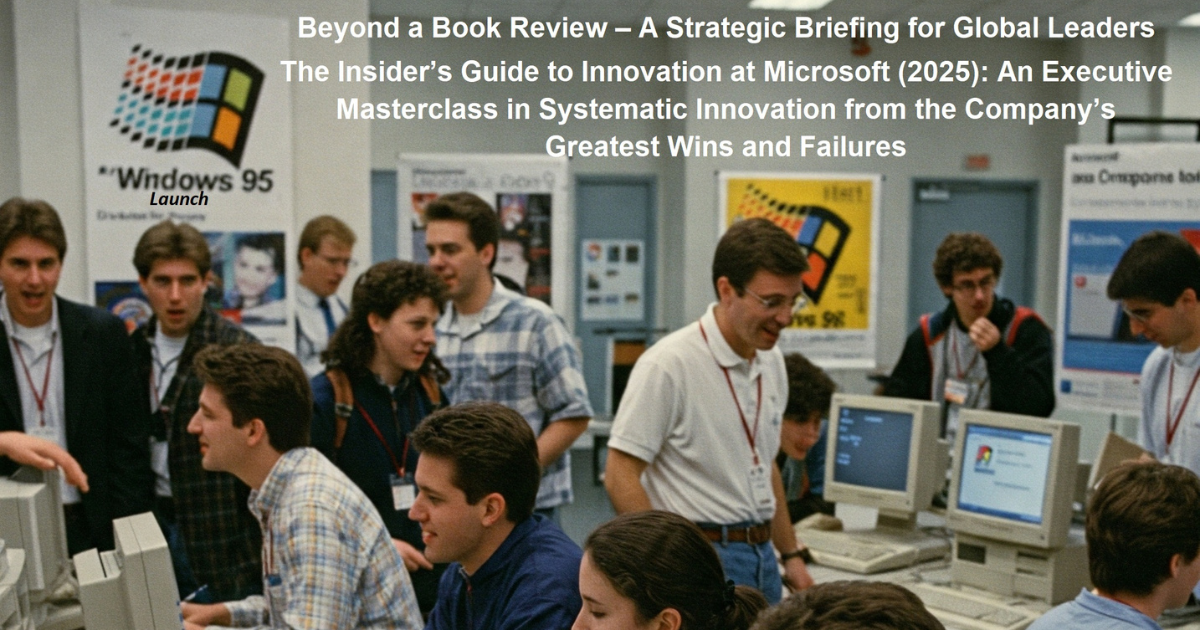

Innovation is not a stroke of luck, it is a meticulously engineered discipline. It is often misunderstood as a stroke of genius – a random spark that ignites transformation. However, The Insider’s Guide to Innovation at Microsoft (2025) dismantles that notion, proving that sustained innovation requires intentional systems, structured methodologies, and leadership foresight. The world’s greatest enterprises do not stumble upon breakthroughs; they architect them. For leaders navigating high-stakes industries, the ability to cultivate systematic innovation is the defining factor between market dominance and irrelevance. For global CEOs, tech billionaires, world leaders, and C-suite executives seeking durable innovation strategies, The Insider’s Guide to Innovation at Microsoft (2025) is a powerful lodestar.
Written by Dean Carignan, Chief of Staff for Microsoft’s Office of the Chief Scientist, and JoAnn Garbin, a 25-year veteran of technology-led innovation and Director of Innovation in Microsoft’s cloud business, the book delivers far more than a retrospective. It is a clarion call to all organisations: Sustainable innovation is not an act of genius or sporadic flashes of brilliance, but a result of intentional innovation systems. This is what separates organisations that create lasting impact from those that fade into obscurity. The authors unlock the essence of how one of the world’s most formidable technology companies has built – and rebuilt – its innovation machinery over decades.
But how does a company operating at this scale manage to continuously innovate, transform defeats into opportunities, and do so with moral clarity? That is the central question this book masterfully answers. This book review explores how Microsoft built a culture of innovation, embraced self-disruption, and deployed asymmetric strategies to compete with industry titans – insights that are applicable far beyond the tech world.
Beyond a Book Review – A Strategic Briefing for Global Leaders: Why This Book Caught My Attention and Demands Yours
✅ Exclusive Insights from Industry Leaders and Rare Perspectives from Microsoft’s Innovation Ecosystem: Dean Carignan and JoAnn Garbin bring high-level and deep expertise in AI, sustainability, and cloud innovation, offering rare perspectives from Microsoft’s inner workings.
✅ Innovation Successes & Failures: A balanced and candid look at Microsoft’s greatest breakthrough wins and critical but strategic missteps provides valuable lessons in risk-taking, strategy, and resilience.
✅ Failure as a Catalyst: The inclusion of failures ensures that the book does not fall into the trap of mere corporate glorification. True visionaries learn from failure, making this theme a magnet for top decision-makers.
✅ Applicability Across Sectors: The insights gained are not confined to tech; lessons extend beyond technology into leadership, strategy, and entrepreneurship – they offer lessons for entrepreneurs, executives, policymakers, and investors seeking to drive innovation in their fields.
✅ Dynamic & Thought-Provoking Themes: The engaging contrast between success, failure, risk-taking, adaptability, and long-term vision, coupled with first-hand leadership reflections, ensures a compelling and unforgettable impact.
✅ Responsible AI, Sustainable Innovation and Sustainability Synergy: Given the burgeoning ubiquity of AI in all industries (no longer optional) and its transformative power, along with sustainability's growing prominence, this review is a blueprint for future industry leadership.
✅ Book Content: The core message emphasises intentional systems for innovation, long-term patterns of success, and actionable principles for building innovation capabilities.
Unveiling Microsoft's Innovation Engine: Beyond Serendipity
Microsoft’s innovation journey has consistently redefined industries, from Xbox’s disruptive gaming revolution to Bing’s uphill battle against Google in the fiercely contested search engine arena. The company’s ability to reshape industries and navigate failures reveals valuable lessons that leaders across all sectors can adopt. This offers a sweeping lens into how established giants can drive disruption rather than succumb to it.
Microsoft built a culture of innovation, embraced self-disruption, and deployed asymmetric strategies to compete with industry titans. The insights from the implementation of these strategies are applicable far beyond the tech world. Carignan and Garbin’s insider perspective illuminates a crucial truth that innovation is by deliberate strategic planning cultivated through meticulously designed systems and a deeply ingrained organisational ethos. Indeed, my own experience in guiding global marketing strategies has repeatedly shown that while individual creativity is vital, it is the underlying framework that allows those sparks to ignite and fuel meaningful change.
Build the Right Culture by Allowing Failure Without Blame: Innovation-Driven Leadership and The Power of Belief Systems

1. Innovation Culture Begins with Innovation-Driven Leadership
No organisation can sustain innovation without embedding it in its culture, through innovation-driven leadership. Microsoft’s evolution under Satya Nadella offers a clear testament to the power of an innovation-driven leadership ethos. But how does a company cultivate this mindset? Culture must not be a passive ideal – it must be actively designed. Leaders must champion a growth-oriented philosophy, fostering environments where experimentation is not only tolerated but expected. Consider the reinvention of Microsoft’s cloud business, through a learn-it-all culture, rather than a know-it-all one, the company encouraged intrapreneurship at scale.
For South African and global corporations alike, fostering a culture of innovation begins at the executive level. Leadership must reward risk-taking, eliminate bureaucratic inertia, and institutionalise curiosity at every level.
2. The Culture of Innovation Begins with The Power of Belief Systems Strengthened by Failure – Failure as a Catalyst, Not a Curse
Why do so many innovations initiatives falter before they begin? Because they are driven by technology, not by culture. Microsoft’s most successful innovations, as revealed in the book, emerge from deeply rooted internal cultures that reward experimentation, value diverse perspectives, systematically cultivate groundbreaking ideas to germinate and flourish, allow failure as a stepping stone without blame, and empower employees at all levels to contribute to the innovation process. This insight resonates powerfully with my own experience as a Global Consulting Chief Marketing Officer – companies that bake creativity into their ethos outperform those that treat it as an afterthought. In South Africa, firms such as Discovery Health and Nando’s have succeeded by institutionalising curiosity and bravery at every level of their organisation.
To cultivate a similar environment, leaders must ask: What rituals, incentives, and leadership behaviours define our organisation’s attitude towards risk and reinvention? Without addressing culture first, innovation is little more than a lucky accident.
Embrace Self-Disruption: Kill Your Darlings Before Your Competitors Do or Risk Obsolescence
Is your company brave enough to disrupt its own revenue streams? Microsoft repeatedly proves that the answer must be yes. The company continually reinvented itself, from Windows' dominance to transforming Office into a cloud-driven subscription model powered by Azure, to reimagining Windows as an open integration platform rather than a closed system, Microsoft displays a ruthless willingness to cannibalise its own legacy. This is not corporate nihilism – it is strategic clarity.
In my consultancy work, I often challenge legacy organisations to apply this thinking practically. Consider a large South African bank: could it launch a fintech-style startup arm that actively undermines its brick-and-mortar branches? These uncomfortable questions are where true innovation begins. Microsoft’s bold moves demonstrate that survival demands not only invention, but reinvention.
The ability to self-disrupt is a key trait of forward-thinking organisations. Leaders must realise that holding onto legacy systems, without adaptation, leads to stagnation. Companies must ask: Are we proactively disrupting our business models, or are we waiting for external forces to do it for us? True innovation is self-directed, not reactive.
Focus on User Experience with the User at the Helm: Innovation is Human-Centred, Not Feature-Centred
Microsoft’s victories – whether in AI integration, software development, or gaming ecosystems – stem from its ability to anticipate user needs, simplify interactions, and enhance accessibility. At the heart of truly impactful innovation lies a deep understanding of user needs and desires. How has Microsoft consistently placed the user at the centre of its innovation processes across its diverse product portfolio?
The book vividly illustrates how a relentless focus on user experience has driven the evolution of products like Windows and Office, adapting to changing user behaviours and anticipating future needs. My own marketing philosophy has always been predicated on a profound empathy for the customer; understanding their pain points, aspirations, and evolving expectations is the compass that guides truly successful product development and marketing strategies.
Once again, this cannot be repeated enough, the authors stress that innovation only becomes impactful when it enhances the human experience. For instance, Microsoft’s transformation of Xbox into an inclusive gaming platform, with adaptive controllers and accessibility features, is a case in point. Innovation here was not just about better graphics or hardware speed, but about expanding participation.
For South African businesses aiming to create products and services with global appeal, a deep understanding of diverse user needs and cultural nuances is paramount. As I often tell my teams, innovation without a user-centric lens risks creating solutions in search of a problem. The lesson is clear: Don’t ask what your product can do – ask what your user needs.
Transform Defeats into Opportunities: Every Failure is a Prototype for Success

What happens when a billion-dollar bet flounders? At Microsoft, failure is not an end but a learning instrument. The book dissects notable missteps such as Windows Phone, not with corporate defensiveness, but with forensic clarity. These post-mortems reveal how flawed timing, misaligned incentives, or insufficient ecosystem thinking can derail even technically sound products.
Microsoft’s failed ventures, including Windows Vista and the Surface RT, could have crippled its trajectory. Instead, the organisation pivoted, extracting valuable lessons that catalysed future successes.
What if failure was not an endpoint but a blueprint for reinvention? The most visionary leaders do not fear mistakes – they mine them for competitive insights.
Does failure signify the end, or can it become a catalyst for reinvention? Microsoft’s setbacks – such as its mobile OS struggles – didn’t cripple its trajectory. Instead, the company redirected its focus towards cloud infrastructure, AI, and enterprise solutions, achieving record-breaking revenue streams.
In my work, I encourage companies to establish post-project reviews as part of their innovation system. What went wrong? What did we learn? How might this guide our next bet? Failure, when institutionalised as learning, becomes a wellspring of strategic advantage.
Bridge Research and Products: Connect the Lab to the Market Realities
Groundbreaking ideas often languish in research labs without commercialisation. Why do many research teams fail to convert innovation into market-ready solutions? The gap between academic research and product deployment is often overlooked. Microsoft’s strength lies in its ability to integrate deep research into tangible, commercially viable technologies. The book highlights the importance of creating robust mechanisms for collaboration between research teams and product development units. This necessitates clear communication channels, shared goals, and a culture that values both fundamental discovery and practical application.
The bridge between Microsoft Research and product teams, evidenced by the rapid deployment of AI tools into Azure and Office, is a masterclass in innovation velocity. South African companies can replicate this by forming dedicated innovation bridges between R&D and frontline business units. For example, an agricultural technology firm might turn university research on climate-resilient crops into commercial farming solutions.
In my career, I've often seen promising research languish in silos, failing to translate into market-ready solutions. Building effective bridges between these two critical functions is paramount for maximising the return on investment in research and development. How can we better connect the brilliance of the laboratory with the demands of the marketplace? For South African academic institutions and businesses, fostering stronger collaborations can unlock significant potential for innovation and economic growth.
Deploy Asymmetric Strategies: Compete Where the Giants Can’t
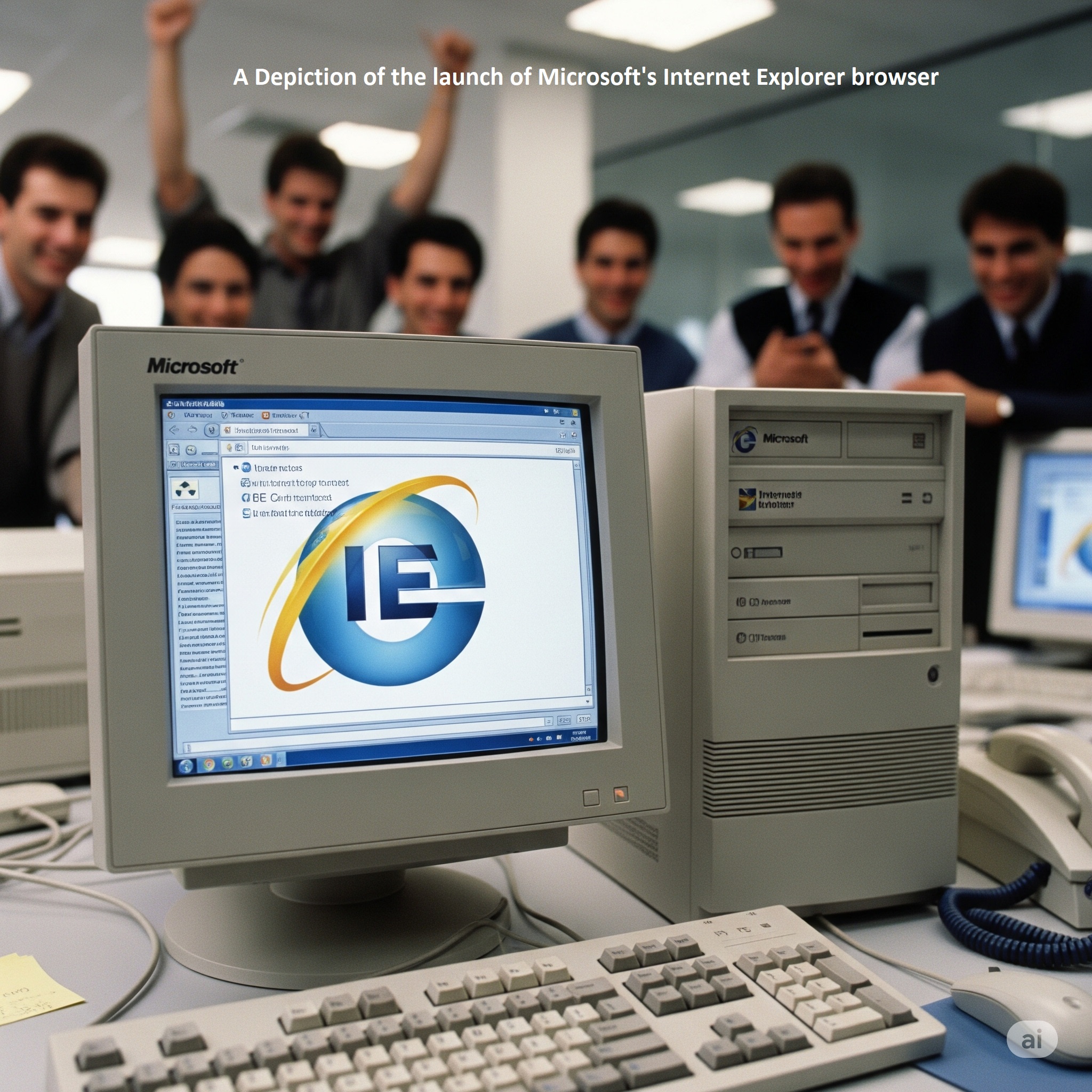
How does an organisation compete with an industry juggernaut without being overpowered? By finding asymmetric battlegrounds. Microsoft didn’t simply challenge Google in search – it deployed asymmetric strategies. The book details instances where Microsoft has leveraged unique strengths, identified underserved niches, and adopted unconventional approaches to gain a competitive edge. Instead of replicating Google’s approach, Microsoft integrated AI-driven search functionalities into Bing, enhancing enterprise productivity tools. The company doesn’t aim to win everywhere – just where it matters strategically.
In the realm of strategic marketing, understanding your opponent's weaknesses and exploiting your own distinct advantages is crucial. In highly competitive South African markets, such as retail or financial services, this principle is golden. Challenger brands must ask: Where can we create unique value that the market leader is structurally incapable of offering? I have seen local fintechs thrive by serving underserved SMEs and Township markets, not by emulating the big banks. Market leaders do not follow the rules – they rewrite them.
Balance Speed with Responsibility: Innovation Without Ethics is Fragile
One of the most refreshing themes in the book is Microsoft’s growing commitment to responsible innovation. The focus on responsible AI practices, championed by the book’s co-author, Dean Carignan, underscores the growing importance of ethical considerations in the innovation process. Whether it’s in the deployment of generative AI or the handling of cloud data, the authors emphasise that velocity must be balanced with accountability.
I resonate strongly with this theme. As a Global Marketing Strategist with deep involvement in AI strategy, I believe that trust is now a key differentiator. I recognise the profound impact that technology can have on society, and the ethical responsibility that organisations bear in its development and deployment. Leaders must ask: Are we building for impact, or just for scale? A responsible approach to innovation not only mitigates reputational risk but also builds enduring customer relationships.
South Africa as an Emerging Economy: Would These Innovation Failures Be Survivable in Less Capital-Rich Environments?
Microsoft’s ability to navigate failures and pivot toward reinvention is largely enabled by its capital-rich position, allowing room for experimentation, adaptation, and recalibration without existential risk. However, while Microsoft has the financial resilience to absorb multi-billion-dollar misfires, in emerging economies like South Africa, failure is often perceived as costlier and less forgiving due to limited financial buffers, constrained investment ecosystems, and high-stakes competition.
Innovation in Resource-Limited Markets: Surviving Failures Strategically
In environments where capital constraints shape decision-making, organisations must adopt a more calculated approach to innovation. Lessons from Microsoft’s failure-management strategies remain highly applicable, but require customised execution suited to South Africa’s economic realities:
✔ Lean Innovation Models: Instead of large-scale innovation bets, South African businesses can adopt incremental innovation, ensuring viability before scaling.
✔ Strategic Partnerships & Ecosystem Leverage: Collaborating with government bodies, accelerators, and multinational investors can soften the financial risks of disruptive experimentation.
✔ Agility Through Adaptability: While Microsoft pivoted from failures, South African businesses can pre-emptively align innovation efforts with economic resilience, ensuring every move is designed for long-term survival, not just market disruption.
✔ Failure as a Market Advantage: Learning from setbacks isn’t just about bouncing back – it’s about turning failures into a competitive advantage through strategic reinvention
A Critical Question for South African Leaders
While Microsoft can withstand failures due to deep financial reserves, the real challenge for emerging-market innovators is not merely surviving failures but engineering failure-resilient models – ones that turn setbacks into stepping stones for sustainable growth.
For South African business leaders, the key question isn’t "Can we afford failure?" but rather "How can we structure failure as a driver of strategic reinvention?"
Systematising Innovation to Create Enduring Value
The greatest insight from The Insider’s Guide to Innovation at Microsoft is that innovation does not happen by accident. It is not the result of lone geniuses or sudden flashes of insight. It is the consequence of systems, culture, and deliberate strategy.
Whether your organisation is a multinational in Johannesburg or a family-run firm in Stellenbosch, these principles apply.
As a Global Consulting Chief Marketing Officer with nearly three decades of experience across the trifecta of Strategic Marketing, Daily Marketing Management and Digital Marketing, I challenge you, leaders of influence and architects of the future, to implement the actionable insights from this book.
Ask the difficult questions. Build your culture. Design with users in mind. Learn from defeat. Forge the bridges between research and execution. Compete asymmetrically. Innovate with responsibility.
Executives should immediately:
✔ Evaluate their current innovation framework.
✔ Assess whether failure is being leveraged as an opportunity.
✔ Implement asymmetric strategies to outmanoeuvre competitors.
The future will not be built by those who wait for inspiration, but by those who engineer it with intention.
Will your organisation be among them?
Images by Bandile Ndzishe of Bandzishe Group
About bandile ndzishe

Bandile Ndzishe is the CEO, Founder, and Global Consulting CMO of Bandzishe Group, a premier global consulting firm distinguished for pioneering strategic marketing innovations and driving transformative market solutions worldwide. He holds three business administration degrees: an MBA, a Bachelor of Science in Business Administration, and an Associate of Science in Business Administration.
With over 29 years of hands-on expertise in marketing strategy, Bandile is recognised as a leading authority across the trifecta of Strategic Marketing, Daily Marketing Management, and Digital Marketing. He is also recognised as a prolific growth driver and a seasoned CMO-level marketer.
Bandile has earned a strong reputation for delivering strategic marketing and management services that guarantee measurable business results. His proven ability to drive growth and consistently achieve impactful outcomes has established him as a well-respected figure in the industry.
As an AI-empowered and an AI-powered marketer, I bring two distinct strengths to the table: empowered by AI to achieve my marketing goals more effectively, whilst leveraging AI as a tool to enhance my marketing efforts to deliver the desired growth results. My professional focus resides at the nexus of artificial intelligence and strategic marketing, where I explore the profound and enduring synergy between algorithmic intelligence and market engagement.
Rather than pursuing ephemeral trends, I examine the fundamental tenets of cognitive augmentation within marketing paradigms. I analyse how AI's capacity for predictive analytics, bespoke personalisation, and autonomous optimisation precipitates a transformative evolution in consumer interaction and brand stewardship. By extension, I seek to comprehend the strategic applications of artificial intelligence in empowering human capability and fostering innovation for sustainable societal advancement.
In essence, I explore how AI augments human decision-making in both marketing and other domains of life. This is not merely an interest in technological novelty, but a rigorous investigation into the strategic implications of AI's integration into the contemporary principles of marketing practice and its potential to reshape decision-making frameworks, enhance strategic foresight, and influence outcomes in diverse areas beyond the marketing sphere.