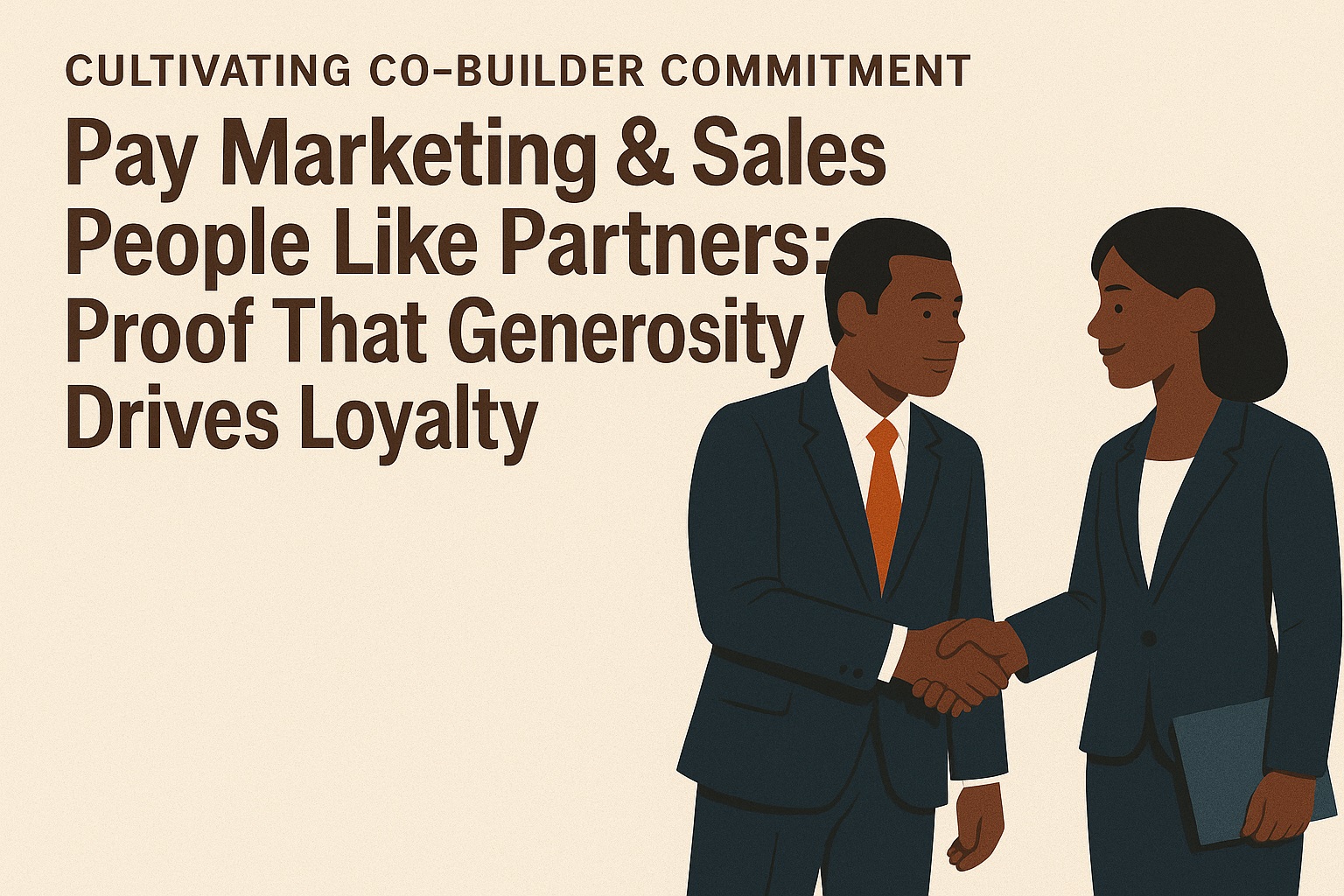

What happens when we stop treating marketing and sales professionals as expendable engines of short-term revenue and start treating them as value-generating partners? As a Global Consulting CMO with nearly three decades of experience across the trifecta of Strategic Marketing, Daily Marketing Management and Digital Marketing, I have asked myself this question countless times – and each time, the evidence in favour of transformation is overwhelming. In an economic landscape demanding both resilience and reinvention, it is no longer sufficient to drive performance through quotas and commissions alone. The companies that will define the next decade are those that compensate influence with ownership, contribution with trust, and effort with enduring stake. Generosity, properly structured, is not a cost – it is a cultural investment that yields exponential returns.
Let us first consider what traditional remuneration frameworks truly signal to high-performing marketing and sales professionals. Commission-based incentives, fixed bonuses and rigid KPIs communicate the message: “You are here to win now, not build tomorrow.” But what if the very model used to motivate these professionals is the one causing their disengagement, their churn, and ultimately, their commodification of client relationships? When loyalty is tied only to the next sale, brand stewardship is hollow. By contrast, when sales and marketing teams are paid like partners, through revenue-sharing, long-term incentives and trust-based autonomy, their strategic commitment becomes personal.
Cultivating Co-Builder Commitment: The Strategic Imperative of Partner-Centric Remuneration in Revenue Generation
For those at the helm of industry, from visionary tech titans to discerning Fortune 500 leaders, a profound shift in perspective is not merely advisable, but an existential imperative. What if the very individuals entrusted with revenue generation were not simply compensated for their labour, but rather incentivised as genuine partners in the enterprise's prosperity? Could such a fundamental alteration in remuneration strategy unlock unprecedented levels of loyalty, engagement, and ultimately, exponential growth?
I assert that a generous, partner-centric approach to compensating marketing and sales teams transcends conventional transactional relationships, fostering a deep-seated commitment that fuels sustainable success. This is not merely a theory – it is a proven strategic advantage. The companies that embrace this model will cultivate unbreakable loyalty, relentless performance, and market dominance. Those that resist? They will struggle with disengagement, stagnation, and high turnover.
The Cost of a Transactional Mindset
How often do businesses complain about low employee retention, disengaged sales teams, or uninspired marketers? Yet, how many leaders truly examine the underlying issue – the way these professionals are incentivised and valued?
Marketing and sales personnel are not mere employees; they are growth architects, revenue drivers, and market influencers. And yet, too often, they are treated as replaceable assets rather than partners. The world’s most successful businesses have realised that generosity in compensation isn’t an expense – it’s an investment in sustained loyalty and performance.
But does paying marketing and sales professionals like partners genuinely yield superior results? The answer is a resounding yes – and the proof is in real-world implementation.
I have witnessed firsthand how profit-sharing, equity incentives, and high-performance bonuses transform marketing and sales teams into unstoppable growth engines. The question is not whether companies can afford to pay generously – it is whether they can afford not to.
The Psychological and Economic Case for Generous Compensation
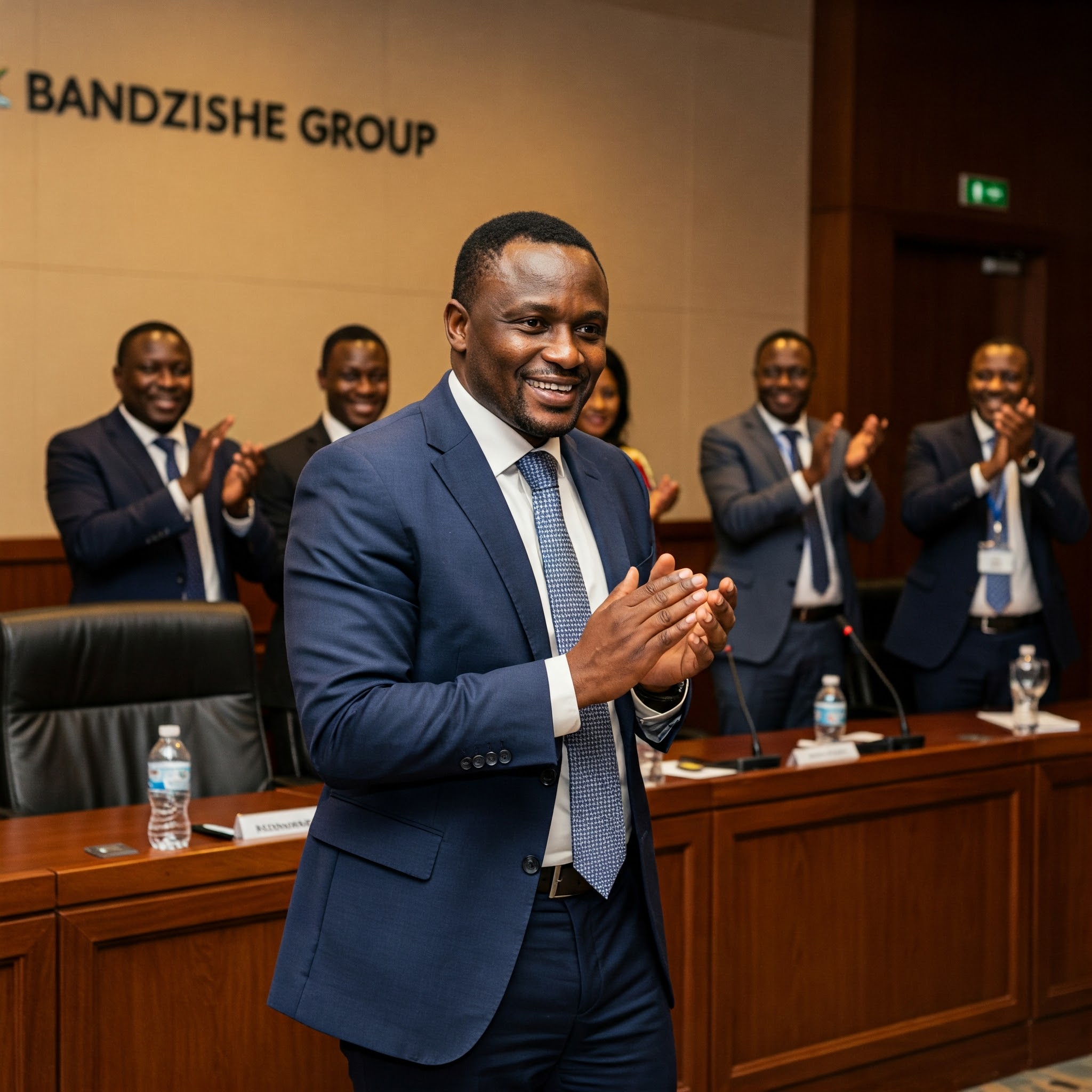
What drives unwavering loyalty and exceptional performance in marketing and sales teams? The answer lies in ownership mentality – the psychological shift that occurs when professionals feel personally invested in the success of the company. A business is only as strong as the people driving its vision and revenue. Marketing and sales teams are tasked with navigating competitive markets, influencing buyer decisions, and securing business growth. How, then, can leaders expect excellence from professionals who feel undervalued and underpaid?
Psychological Triggers That Drive Loyalty
1. Reciprocity: When companies reward generously, employees reciprocate with higher engagement, commitment, and innovation.
2. Status Incentives: Compensation tied to performance and partnership elevates professionals from mere employees to industry leaders, fostering prestige and ambition.
3. Long-Term Vision: Equity stakes and profit-sharing create a future-focused mindset, ensuring that marketing and sales teams think beyond short-term targets.
Economic Proof: The ROI of Generosity
Companies that invest in their people see measurable returns:
• Higher revenue growth – Performance-based compensation directly correlates with increased sales and market expansion.
• Lower turnover rates – Generously compensated professionals stay longer, reducing costly recruitment cycles.
• Stronger brand advocacy – Employees who feel valued become brand evangelists, amplifying market influence.
Equity Is the New Commission: Why Ownership Beats Commission
Is it naive to believe that generosity can drive loyalty in such cut-throat fields? Quite the contrary – the notion is both data-backed and time-tested. In my marketing consultancy, I have observed a consistent pattern: where marketing and salespeople are embedded into the profit story of the business, performance not only improves, but becomes predictable. One South African fintech, for example, transitioned from linear commission models to a team-based revenue pool with a deferred bonus scheme tied to client retention metrics. In less than 18 months, the company doubled its enterprise client base while slashing marketing team attrition by 67 percent.
So, what does “partner-like pay” look like in practice, especially for organisations that cannot immediately offer equity? It begins by redesigning compensation architecture around shared upside and shared insight. A global B2B services firm I worked with created a variable earnings component for its marketing directors based not solely on lead volume or conversion, but on cross-functional growth KPIs – such as lifetime value and client expansion rates. Rather than incentivising volume, this incentivised strategy. The effect was transformational: the marketing team began proactively educating sales colleagues on deeper value propositions, reframing campaign outputs through the lens of long-term revenue creation rather than quarterly success.
Beyond Salary and Commission: Crafting Partner-Level Incentives

Moving beyond the rudimentary framework of base salary plus commission necessitates a more sophisticated and nuanced understanding of what truly motivates high-performing marketing and sales professionals. Are purely transactional rewards sufficient to cultivate the deep-seated loyalty required to navigate the complexities of modern markets? I contend that they are not.
True partnership implies shared risk and shared reward. Implementing profit-sharing schemes, for instance, directly aligns the financial interests of the marketing and sales teams with the overall profitability of the organisation. The provision of equity or stock options, particularly within high-growth sectors, fosters a sense of ownership and long-term commitment, transforming employees into genuine stakeholders. Furthermore, transparent and generously structured performance-based bonuses, predicated on clearly defined and mutually understood key performance indicators, reinforce the notion that exceptional contributions are not merely acknowledged but substantially rewarded.
Partner-Like Pay in Post-AI Marketing and AI-Powered Sales Eras
Are we courageous enough, as business leaders, to surrender a portion of upside today in order to build institutional loyalty tomorrow? This is not just a financial question – it is a philosophical one. In my own leadership journey, I have found that the organisations most resistant to generosity are often the ones most haunted by short-term thinking – clinging to spreadsheets while bleeding top talent. By contrast, progressive enterprises are crafting incentive structures where every marketer and salesperson is, in effect, a brand custodian with something to lose and something to build. The psychological shift from “employee” to “co-builder” is profound.
In an era of AI-enabled marketing automation and predictive analytics, the irreplaceable value of human ingenuity becomes even more visible. AI can scale messaging and optimise tactics, but it cannot build trust, close deals or architect brand experiences. If anything, the digital transformation of the sales funnel increases the importance of emotionally intelligent professionals who can interpret nuance, navigate complexity and shape narratives that resonate. Why, then, would we compensate such individuals with mechanistic models from the industrial era? As technology advances, compensation must evolve to reflect not output, but value creation.
Addressing Potential Challenges and Ensuring Equitable Application
The implementation of partner-centric remuneration is not without its potential complexities. How does one ensure fairness and equity across diverse roles and responsibilities within the marketing and sales functions? Robust performance management frameworks, coupled with transparent communication and clearly defined metrics, are paramount. It is crucial to establish a system that rewards both individual brilliance and collaborative teamwork.
Furthermore, the financial implications of more generous compensation structures must be carefully considered and integrated into the overall business strategy. However, the long-term benefits of reduced attrition, enhanced productivity, and a more deeply engaged workforce invariably outweigh the initial investment. My experience suggests that a phased approach, starting with pilot programmes and iterative adjustments based on performance data and employee feedback, is often the most prudent pathway to successful and sustainable implementation.
Practical Implementation: How Companies Can Adopt This Model

How can companies, both in South Africa and globally, implement generous compensation structures without jeopardising financial stability? How can they effectively adopt a partner-driven compensation strategy for marketing and sales professionals? The answer lies in strategic execution.
1. Equity Incentives, Profit-Sharing and Revenue-Based Compensation Models
Instead of rigid salary structures, businesses should integrate profit-sharing mechanisms to align employee incentives with overall success.
• Implement scaled bonuses tied to long-term revenue rather than short-term sales quotas.
• Allocate stock options, equity stakes or percentage of net profits to top-performing marketing and sales executives based on performance metrics.
• Ensure transparency in profit calculations to build trust and motivation.
• Develop performance bonus structures that reward not just sales volume, but strategic market positioning and branding success.
• Structure vesting periods to encourage long-term commitment.
2. Dynamic and Tiered Performance Bonus Structures
Outdated compensation models breed mediocrity. Companies must embrace performance-driven pay structures that incentivise adaptability and leadership.
• Introduce tiered performance-based models where rewards increase based on strategic business wins. Here, the strategic business wins are rewarded.
• Implement accelerators and progressive performance bonus models that reward exponential growth performance. Here, the more exponential the performance, the greater the rewards for exceeding targets.
3. Long-Term Incentive Plans (LTIPs)
Organisations should aim to reward employees for sustained long-term contributions to a company’s success. Unlike short-term bonuses, LTIPs focus on long-term value creation, aligning employee interests with shareholder goals.
• Invest in LTIPs that link financial gains to brand expansion rather than individual sales cycles.
• Develop multi-year bonus structures tied to company growth milestones.
• Align incentives with strategic objectives, ensuring sustained impact.
• Foster high-risk, high-reward structures that encourage bold marketing initiatives and breakthrough innovations.
4. Culture Shift: Treating Marketing and Sales as Revenue Architects
Many companies undervalue marketing and sales roles, reducing them to cost centres rather than growth engines. The shift must be cultural as well as financial.
• Place marketing and sales leaders in decision-making rooms, allowing them to influence strategic business choices.
• Provide access to performance data so professionals can align their efforts with market demands.
• Encourage collaborative goal-setting, ensuring marketing and sales teams own their targets rather than feeling dictated to.
South African businesses – especially within the finance, technology, and retail sectors – can see unmatched revenue growth by incorporating these structural shifts. Globally, companies that have embraced marketing-led leadership continue to dominate industry landscapes.
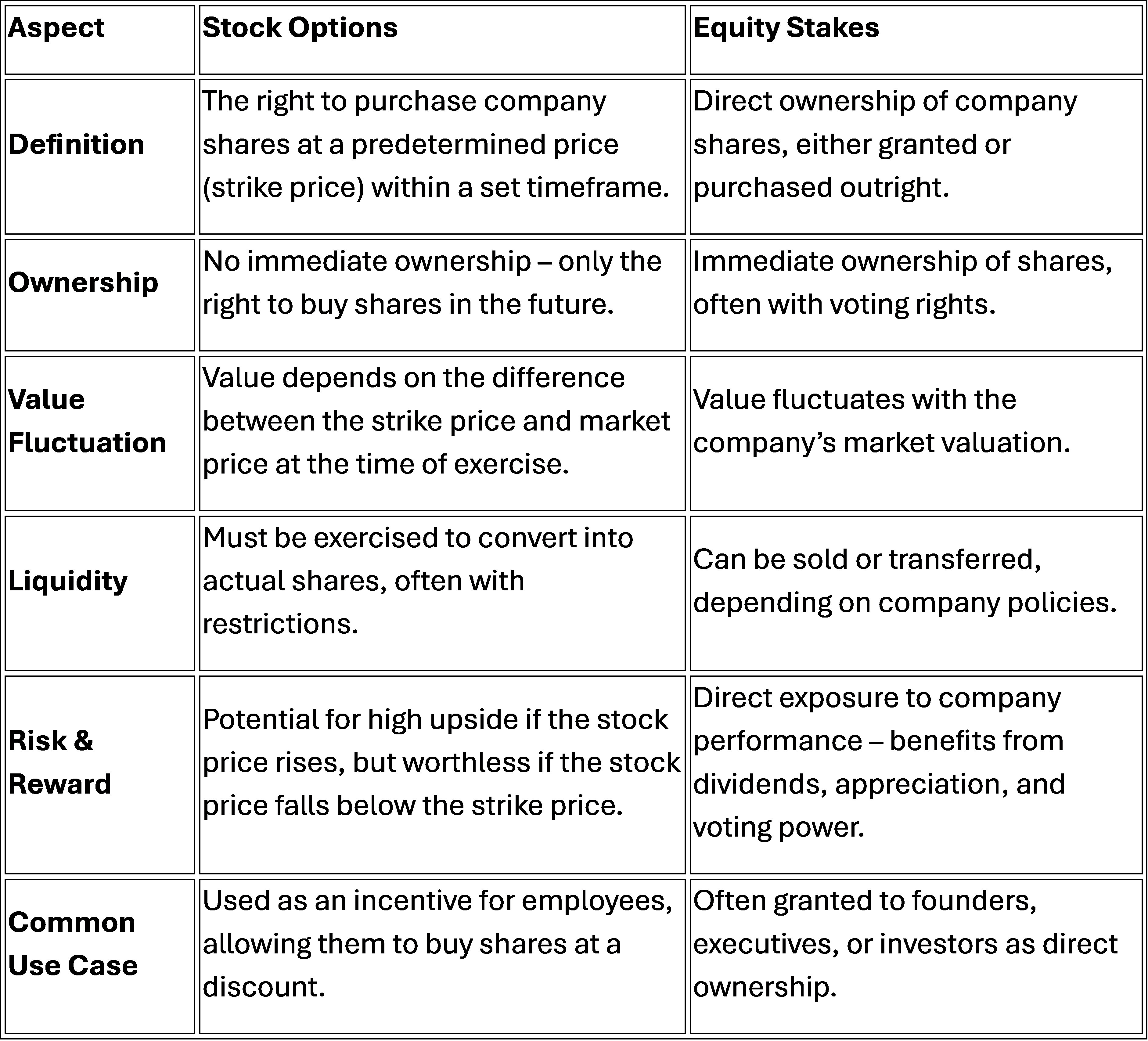
Key Differences Between Stock Options vs. Equity Stakes: Which Is More Powerful for Marketing & Sales Compensation?
• Stock options can be a strong incentive, but they require employees to purchase shares, which may limit accessibility.
• Equity stakes create instant ownership, fostering long-term commitment and strategic thinking.
For marketing and sales professionals, equity stakes are often more impactful, as they immediately align incentives with company success without requiring an upfront financial commitment.
Here, judge for yourself:
Case Studies: How Generosity Transforms Performance in Two Global Companies
Globally, I have witnessed numerous examples of organisations that have reaped significant benefits from adopting such models. Consider a prominent technology firm that, by implementing a robust profit-sharing mechanism for its sales division, experienced a marked decrease in attrition and a substantial uplift in revenue within a fiscal year. Alternatively, reflect upon a multinational consumer goods company that granted stock options to its key marketing leaders, fostering a culture of long-term strategic thinking and brand stewardship.
Case Studies: Two South African Companies, Including a Tech Firm That Tripled Its Market Share
In South Africa, where economic volatility often forces companies into cost-cutting mindsets, the few organisations that embrace generous compensation have witnessed remarkable resilience and expansion. By aligning incentives with long-term business success, they have cultivated high-performance cultures that thrive even in challenging markets.
A leading South African tech firm recognised that transactional salaries were causing disengagement and rapid talent loss. By adopting a performance-based compensation model, they saw:
• A threefold increase in market share, as marketing and sales professionals took ownership of brand positioning.
• Cost efficiencies, as employee turnover reduced dramatically.
• Industry-wide recognition, proving that investing in people delivers market dominance.
Another South African example, one mid-sized retail company introduced a brand equity scorecard for its marketing department, linked to customer lifetime value and net promoter scores. The results? Within one year, they had not only increased customer retention by 22 percent but also sparked a 40 percent uptick in internal referrals for marketing hires – loyalty begetting loyalty.
These cases illustrate a powerful truth – generosity is not a business expense; it is the most profitable investment a company can make.
From Hiring to Honour: Why Companies Resist Value-Aligned Compensation Models
Why do so few companies adopt this approach? One reason is fear – a lingering belief that too much generosity will breed entitlement or diminish hunger. But this fear is misplaced. Generosity, when tied to accountability and clarity, does not dilute ambition – it elevates it. I have seen it repeatedly: professionals who are empowered to act like partners behave like innovators. They stay longer, think broader, and contribute beyond their pay grade.
Personal Reflection: How Ownership Mentality Unlocks the ROI of Generosity in Talent Markets

In South Africa, where economic volatility often pressures firms into tactical thinking, the implementation of such models requires deliberate structure. For clients I have advised, I typically recommend a phased three-step framework:
(1) Audit current incentive schemes for alignment with long-term business objectives.
(2) Design hybrid models blending fixed salary, performance-linked bonuses and discretionary value shares.
(3) Communicate transparently and regularly, turning incentives into ongoing narratives of growth.
Reflecting on my own experience, I have seen how marketing and sales professionals flourish when treated as partners rather than employees. Imagine leading a team where every individual operates with the mindset of a shareholder—where their decisions are driven not by short-term commissions but by long-term strategic growth.
Would such a team outperform competitors? Would they innovate fearlessly? Would they drive market dominance? The answer is unequivocally yes.
As a marketing leader, I have never once regretted over-rewarding someone who fundamentally changed the trajectory of a campaign, client relationship or brand reputation. But I have deeply regretted the times I failed to fight for those professionals in compensation conversations, only to see them poached by competitors who understood their value. We lose more than skills when we lose great marketing and salespeople – we lose momentum, memory and message continuity. And yet, we often expect loyalty in the absence of meaningful investment. That is not strategy – that is wishful thinking.
In a time when AI, automation and decentralisation are redefining roles, the human element in sales and marketing has never been more irreplaceable – or more worth retaining. So, the real question is not, “Can we afford to pay like partners?” but “Can we afford not to?” Loyalty is no longer a function of tenure – it is a function of meaning. And meaning, in turn, is derived from mutual value – shared purpose, shared gains, shared vision.
A Call to the Bold
The evidence is clear: Generosity drives loyalty, loyalty drives performance, and performance drives market dominance. The companies that pay marketing and sales professionals like partners will own the future.
To CEOs, founders, investors and policymakers reading this: your marketing and sales talent are not just executors of growth – they are architects of it. Treat them accordingly. Rethink how you reward contribution. Replace short-term mechanics with long-term trust. In doing so, you will not only future-proof your business, but you will build cultures where loyalty is not demanded – it is volunteered.
Understand this:
The choice is simple, but the impact is generational: Turn mere employees into co-builders. Pay like partners, grow like leaders.
Images by Bandile Ndzishe of Bandzishe Group
About bandile ndzishe

Bandile Ndzishe is the CEO, Founder, and Global Consulting CMO of Bandzishe Group, a premier global consulting firm distinguished for pioneering strategic marketing innovations and driving transformative market solutions worldwide. He holds three business administration degrees: an MBA, a Bachelor of Science in Business Administration, and an Associate of Science in Business Administration.
With over 29 years of hands-on expertise in marketing strategy, Bandile is recognised as a leading authority across the trifecta of Strategic Marketing, Daily Marketing Management, and Digital Marketing. He is also recognised as a prolific growth driver and a seasoned CMO-level marketer.
Bandile has earned a strong reputation for delivering strategic marketing and management services that guarantee measurable business results. His proven ability to drive growth and consistently achieve impactful outcomes has established him as a well-respected figure in the industry.
As an AI-empowered and an AI-powered marketer, I bring two distinct strengths to the table: empowered by AI to achieve my marketing goals more effectively, whilst leveraging AI as a tool to enhance my marketing efforts to deliver the desired growth results. My professional focus resides at the nexus of artificial intelligence and strategic marketing, where I explore the profound and enduring synergy between algorithmic intelligence and market engagement.
Rather than pursuing ephemeral trends, I examine the fundamental tenets of cognitive augmentation within marketing paradigms. I analyse how AI's capacity for predictive analytics, bespoke personalisation, and autonomous optimisation precipitates a transformative evolution in consumer interaction and brand stewardship. By extension, I seek to comprehend the strategic applications of artificial intelligence in empowering human capability and fostering innovation for sustainable societal advancement.
In essence, I explore how AI augments human decision-making and strategic problem-solving in both marketing and other domains of life. This is not merely an interest in technological novelty, but a rigorous investigation into the strategic implications of AI's integration into the contemporary principles of marketing practice and its potential to reshape decision-making frameworks, rearchitect strategic problem-solving paradigms, enhance strategic foresight, and influence outcomes in diverse areas beyond the marketing sphere.