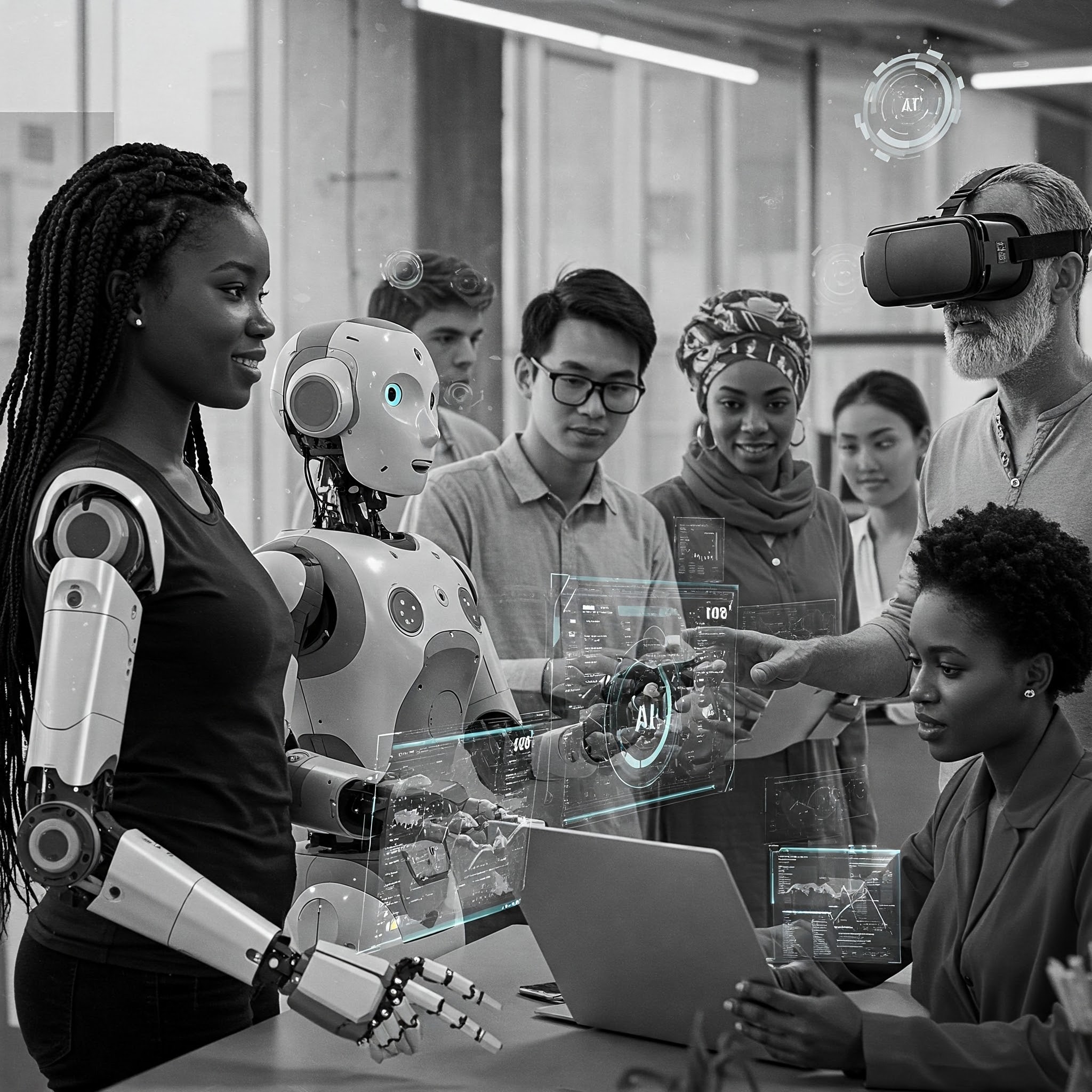

Artificial Intelligence (AI) is transforming global economies, but will it be a catalyst for prosperity or a harbinger of mass unemployment? To those who persist in portraying AI as a harbinger of mass unemployment, is such a narrative truly inevitable? Or, rather, a self-fulfilling prophecy of doom born of inaction and a failure of strategic vision? In South Africa, where chronic unemployment hovers at unprecedented crisis levels, AI presents both a formidable challenge and a historic opportunity.
As I reflect on the potential of AI, particularly within the dynamic context of South Africa – where nearly half of the working-age population faces chronic unemployment, recorded at 41.9% under the expanded definition that includes those frustrated, despaired, and discouraged from seeking work, with an alarming 45.5% among the youth, and 32.1% under the standard definition, based on data from the fourth quarter of 2024 – I see not a threat, but a profound opportunity. A chance to redefine economic paradigms, to unlock unprecedented growth, and to create a future where technology empowers, rather than displaces, human potential.
AI, when leveraged with foresight and strategy, does not herald mass displacement – it unlocks mass prosperity. The narrative doesn't have to hinge on loss. AI has the power to act as a growth catalyst, driving economic expansion while creating dynamic employment opportunities. The challenge lies in how South Africa can leverage AI thoughtfully to not just safeguard jobs, but generate unprecedented workforce opportunities across industries.
Technology is Only a Man-Made Tool: Its Impact is Determined by Those Who Wield It
AI is neither a panacea nor a peril – it is only a tool, made by humans, and its impact is determined by those who wield it. If wielded correctly, AI could become the most powerful job-creation tool of the 21st century. Rather than succumbing to fears of automation rendering human workers obsolete, we must ask: How can AI be harnessed to drive inclusive growth, generate new industries, and unlock employment on a grand scale? The answer lies in a deliberate, strategic approach that aligns AI deployment with workforce development, economic expansion, and industrial innovation.
South Africa, with its youthful demographic, burgeoning entrepreneurial spirit, and strategic geographic location, stands poised to become a global leader in AI-driven economic development. But how do we translate this potential into tangible results? How do we ensure that AI becomes a catalyst for widespread prosperity, rather than a source of further inequality?
The solution rests in strategic investment, targeted skills development, and ethical governance. We must identify key sectors where AI can create significant employment opportunities, and then proactively foster innovation and investment within those areas.
The Global AI-Employment Paradigm: Risk vs. Opportunity
The fear of AI-induced job destruction is neither unfounded nor new. History is replete with examples where technological advancements initially disrupted existing labour markets, only to ultimately generate entirely new industries and employment opportunities. Consider the Industrial Revolution, the rise of computing, and the advent of the internet. Disruptive technologies have always eliminated certain jobs while simultaneously creating new ones. Are we to believe that AI will be any different, if we choose to direct its course? The real question is: Will South Africa lead or lag in shaping AI for job creation?
Does AI’s Impact on Jobs Mean a Job Automation Threat? Myths vs. Reality: A South African Perspective
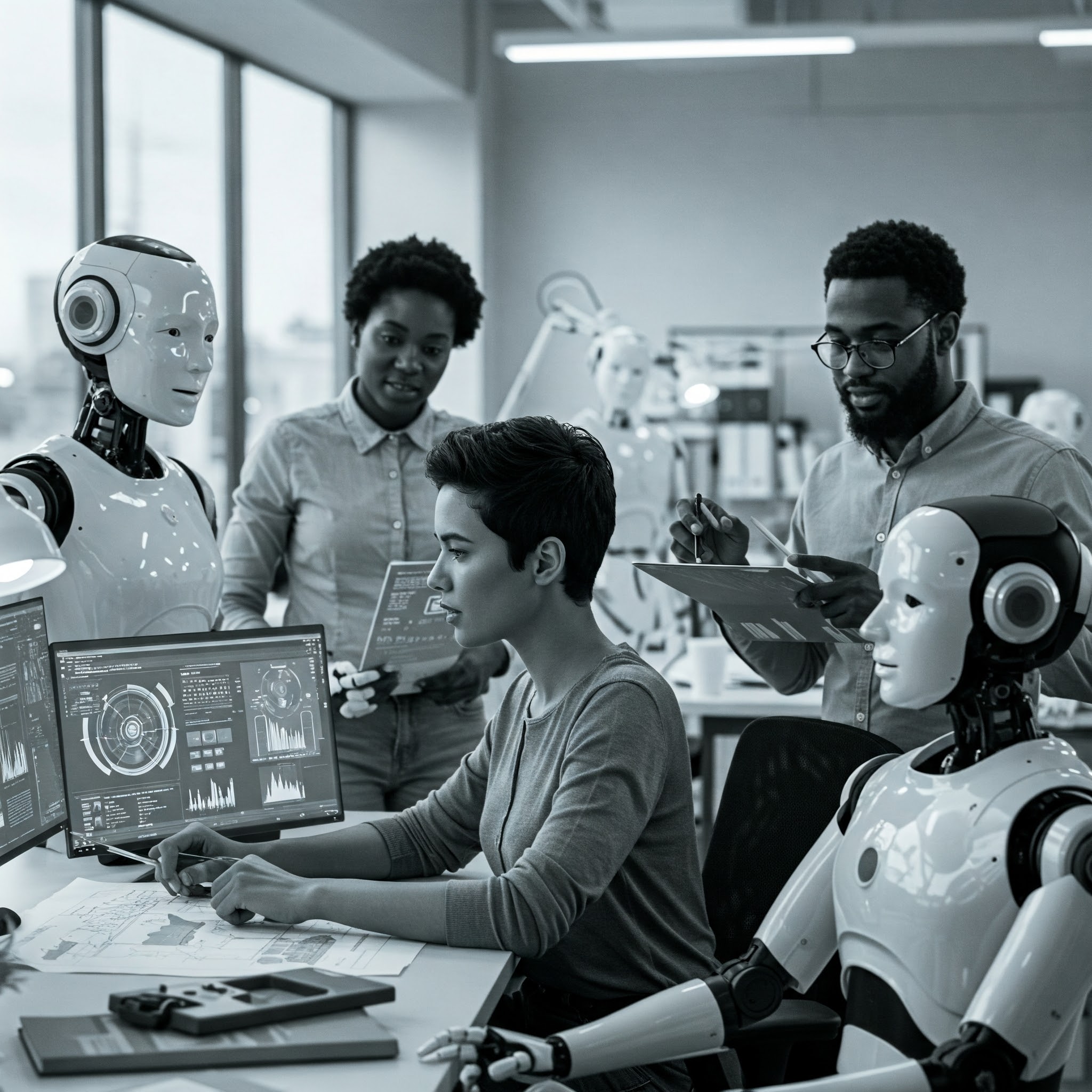
The assumption that AI will replace human jobs across the board is misleading. Studies from the World Economic Forum and McKinsey & Company suggest that AI will displace some jobs while creating millions of new roles in AI development, maintenance, and AI-augmented industries. Countries that invest in reskilling and digital transformation stand to gain significantly.
For instance, in industries like manufacturing, mining, and retail, routine tasks are increasingly vulnerable to automation. A report by the McKinsey Global Institute predicts that up to 39% of jobs in South Africa are at risk by 2030, disproportionately affecting workers with limited access to digital tools and skills.
Yet, ignoring these risks isn't an option. To avoid this, South Africa must invest in reskilling and digital transformation. The country’s workers must be equipped and empowered to have unlimited access to digital tools and skills. World leaders have shown that governments and businesses must rethink strategies, investing in AI not as a replacement for humans but as a collaborator.
The local context highlights a critical inflexion point: South Africa must pivot its policies and investments to safeguard workers in the short term while creating avenues for long-term, sustainable growth.
International Best Practices and Case Studies: AI Boosting Employment
Lessons from global and local success stories can inspire actionable steps:
Global Examples: Countries like Germany, Singapore and Finland have embraced AI while upskilling their workforces. Germany’s Industrie 4.0 programme integrates AI into manufacturing, enhancing productivity while preserving employment through reskilling initiatives. Singapore, meanwhile, has launched AI-driven education reforms to ensure its workforce remains competitive. The country’s initiatives in logistics and healthcare show how to balance innovation with workforce growth. Finland’s AI strategy, which emphasizes upskilling to align workers with new job opportunities, stands as another shining example.
Local Success: Discovery Health’s use of AI for personalised healthcare demonstrates how South African companies can adopt AI without sacrificing human jobs. Similarly, companies like Aerobotics, a South African agritech firm using AI for precision farming, prove that AI can drive efficiency and create new employment streams.
Can South Africa continue to replicate these models while tailoring them to its unique socio-economic landscape?
The African Context
AI adoption in Africa is lagging, but the opportunity is immense. While global AI firms focus on developed markets, Africa’s youthful workforce and growing digital ecosystem provide fertile ground for AI-powered industries. Agritech solutions like Aerobotics showcase the potential for AI to scale productivity while fostering job creation.
South Africa’s Economic Challenges and AI’s Potential Role
South Africa faces a dual challenge: addressing an unemployment rate that hovers uncomfortably high at over 32%, with youth unemployment even higher, while fostering economic growth in a competitive global landscape. Amidst these challenges, AI offers transformative potential. The question is not whether AI will create new opportunities but how it can be deliberately deployed to benefit all South Africans.
Imagine a South Africa where AI-powered systems drive efficiencies in agriculture, manufacturing, and logistics, creating new roles for skilled and semi-skilled workers. Can AI really uplift sectors long plagued by inefficiency and underdevelopment? AI is often seen as a threat to these jobs, but what if it could be the very solution we need? AI has the potential to revolutionise key sectors by boosting productivity and generating entirely new industries.
Embracing AI for AI-Driven Job Creation: Consider These Opportunity Landscapes
AI need not equate to job destruction. Instead, it holds transformative potential for massive job creation when applied strategically across critical sectors – such as those discussed in the sections that follow. By harnessing AI’s capabilities to foster innovation and efficiency, it can empower businesses to create new, specialised roles while enhancing existing ones. This paradigm shift highlights AI’s role as not just a tool for automation, but a powerful catalyst for sustainable job creation, particularly in regions aiming to bridge economic and digital divides.
AI as a Productivity Multiplier
In industries like agriculture and mining, AI can enhance efficiency while creating skilled employment opportunities. Take the example of South African mining giant Anglo American, which has integrated AI-driven predictive maintenance into its operations. This not only improves safety and efficiency but also creates high-value jobs in AI maintenance and analytics.
Advanced Agriculture: A Fertile Ground for AI
Imagine a South African agricultural sector transformed by precision farming techniques, AI-powered resource management, and optimised supply chains. Companies such as Aerobotics, utilising drone technology and AI to analyse crop health, are already demonstrating the transformative power of this approach. Could we not expand such initiatives to empower smallholder farmers, improve food security, and create thousands of new jobs in rural communities? The answer is an emphatic yes.
Renewable Energy: Powering a Sustainable Future
South Africa’s transition to renewable energy presents another compelling opportunity. Smart grids, predictive maintenance, and AI-optimised energy distribution can enhance efficiency, reduce costs, and create a plethora of skilled jobs in the green economy. Companies like SOLA Group are already implementing large-scale solar solutions, and AI can enhance these projects significantly.
Digital Healthcare: Bridging the Gap
In a nation grappling with healthcare disparities, AI can be a powerful tool for expanding access to quality care. AI-powered diagnostics, remote patient monitoring, and personalised medicine can revolutionise healthcare delivery, particularly in underserved areas. Consider the potential for AI-driven telemedicine platforms to connect remote communities with specialist care.
Tech-Enabled Education: Investing in Human Capital
The cornerstone of any successful AI strategy is a skilled workforce. We must invest in education and training programmes that equip individuals with the skills needed to thrive in the AI-driven economy. This means integrating AI and data science into school curricula, establishing vocational training programmes focused on AI applications in specific industries, and creating industry-led apprenticeships and mentorship programmes. Imagine personalised learning platforms powered by AI, tailored to the individual needs of each student.
Telecommunications: Bridging South Africa’s Urban-Rural Digital Divide
By leveraging AI to streamline network deployment and operations, the telecommunications sector can drastically improve connectivity in underserved areas. This not only promotes digital inclusion but also opens up job opportunities in AI-driven connectivity management, network analysis, and customer support for expanded digital services.
Logistics: Transforming Supply Chains and Creating Regional Hubs
With the growing reliance on AI for supply chain optimisation, South Africa is positioned to become a leader in regional logistics innovation. AI can enhance warehouse efficiency, predictive maintenance, and delivery networks, creating a variety of roles ranging from warehouse managers to AI coordinators and data analysts.
Ethical AI Governance: Ensuring Inclusive Development by Bridging the Digital Transformation Gap
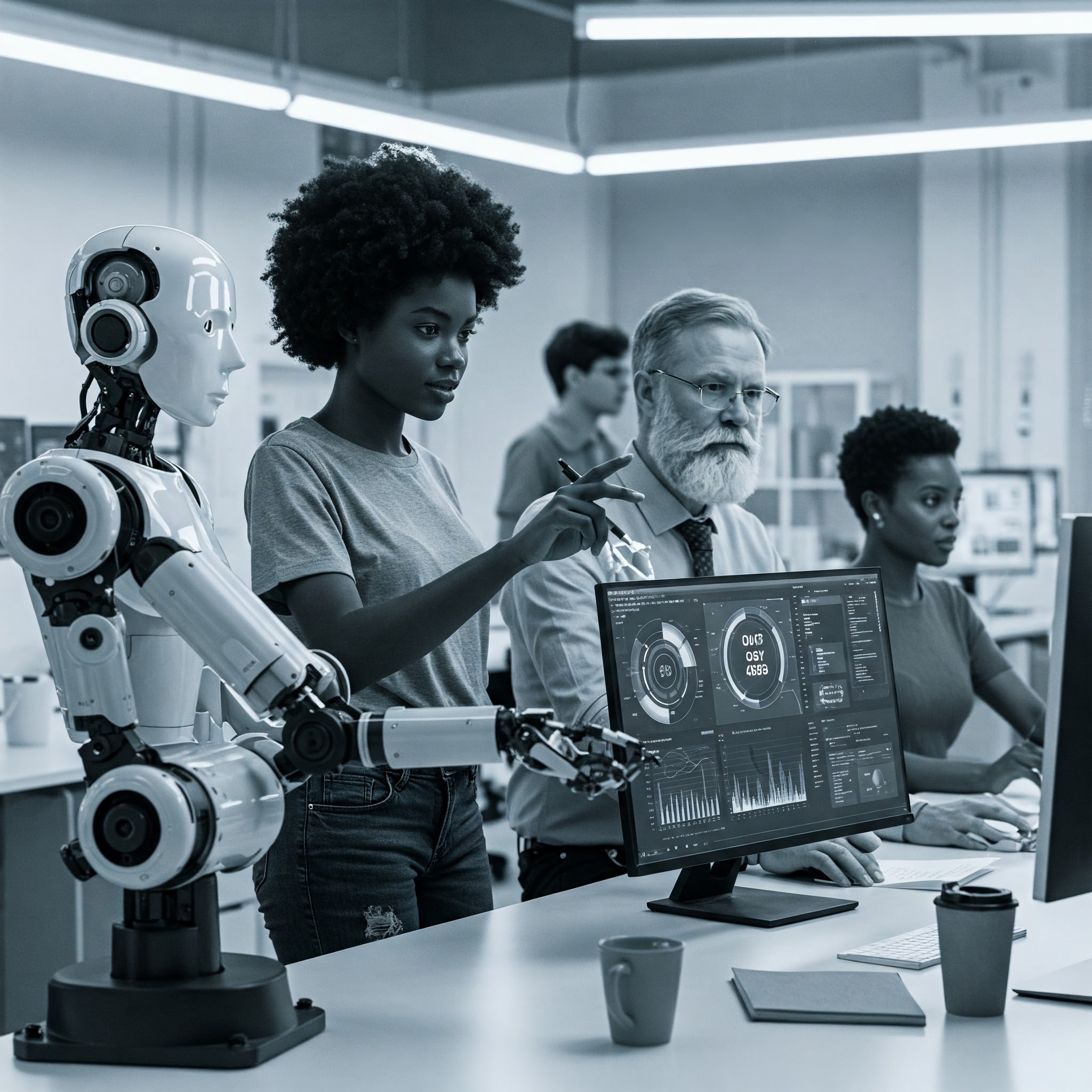
Yet, fragmented AI adoption highlights the need for South Africa to improve its digital infrastructure and education systems to unlock AI’s benefits and realise its full potential for all. Can AI truly be a force for inclusive economic growth? Only if strategic policies prioritise workforce inclusion over pure automation.
As we embrace the potential of AI, we must also be mindful of its potential risks. Bias, inequality, and job displacement are legitimate concerns. This is why a robust regulatory framework is essential, one that promotes ethical AI development and deployment. We must ensure that AI benefits all segments of society, particularly marginalised communities.
My Reflections on AI Implementation: Ensuring AI Benefits Both Global Giants and SMEs
Reflecting on South Africa’s potential, I often wonder: what if we fail to act? The cost of inaction is enormous. Yet, I’m equally energised by what’s possible. For me, AI isn’t just a set of algorithms; it’s a tool to rewrite South Africa’s narrative from one of disparity to one of inclusive growth. By fostering innovation, encouraging AI adoption among SMEs, and prioritising workforce development, we can create a future where AI means prosperity, not displacement.
Why should AI adoption only benefit global giants? It shouldn’t. South African SMEs can – and must – capitalise on AI technologies tailored to their specific needs. For instance, consider the challenges of running an SME in Cape Town: limited staff, tight budgets, and the need for rapid decision-making. AI tools like automated customer service platforms and marketing analytics software can free up human capital to focus on growth-driving activities.
The hypothetical scenario is clear: picture a small logistics business in Gauteng that struggles with inefficiencies in delivery routes. By implementing an AI-based route optimisation tool, the business cuts delivery times in half, reduces fuel costs, and hires additional staff to manage increased demand. This is not a far-fetched idea; global companies like Amazon already use AI to optimise every facet of their supply chain.
The Five Pillars of AI-Driven Job Creation in South Africa: Practical Steps for Avoiding Job Destruction
1. AI-Enabled Workforce Development
Reskilling Initiatives: Programmes like Microsoft’s AI skills development initiative in South Africa provide a model for large-scale workforce upskilling. Localised AI boot camps and online AI training courses should be widely available to equip professionals with the necessary skills.
AI in Education: Integrating AI into curricula, much like Finland’s Elements of AI course, could ensure future workers possess AI literacy. AI should be introduced as early as secondary school, with tertiary institutions offering specialised AI degrees and certifications.
Public-Private Collaboration: Universities, businesses, and government must co-develop AI training centres to meet industry demands. Collaboration on AI-driven apprenticeships and internships can provide hands-on experience for students and professionals transitioning into AI careers.
AI in Vocational Training: Traditional blue-collar jobs can be enhanced rather than replaced by AI. South Africa’s Technical and Vocational Education and Training (TVET) colleges should integrate AI-driven automation courses to future-proof jobs in manufacturing and engineering.
AI-Driven Remote Work and Gig Economy: AI-powered freelancing platforms can enable South Africans to access international job markets, providing employment beyond local economic constraints.
2. AI as a Growth Engine for AI Entrepreneurship, SMEs and Startups
Can AI empower small businesses rather than just large corporations? Absolutely. AI-driven automation can reduce operational costs for SMEs, while AI-powered e-commerce platforms like Yoco are already helping South African entrepreneurs scale their businesses. AI-driven customer analytics can help SMEs better understand market demand and consumer behaviour. Digital assistants powered by AI can handle administrative tasks, freeing up small business owners to focus on growth.
AI-powered lending platforms can also enhance access to credit for SMEs, making it easier to scale operations and create more jobs. Government-backed AI innovation hubs can further support entrepreneurs in leveraging AI to build competitive businesses. The government must empower South Africans to become innovators by funding startups that solve local challenges using AI, such as fintech platforms or AI-driven agricultural tools.
3. AI-Powered Industrial and Infrastructure Innovation
South Africa’s manufacturing and infrastructure sectors can leverage AI for efficiency and job creation. AI-enhanced smart grids can revolutionise energy distribution, reducing power outages while creating employment in AI-driven energy analytics. AI-powered logistics can optimise transportation, enabling greater supply chain efficiency and expanding trade opportunities. Manufacturing automation, when paired with human oversight, can enhance productivity while generating new roles in AI-assisted production lines.
4. AI for Inclusive Economic Development
AI must be deployed to serve not only urban areas but also rural communities. AI-driven agricultural solutions, such as automated irrigation and pest control, can improve yields while maintaining farming employment. AI-powered microfinance can enhance access to capital for underbanked entrepreneurs. By tailoring AI solutions to South Africa’s unique economic landscape, we can foster inclusive growth and ensure that AI benefits reach all segments of society.
5. AI in Public Services and Governance
Governments can use AI to enhance service delivery, from smart healthcare diagnostics to AI-driven public safety initiatives. AI-powered chatbots can streamline government service inquiries, while predictive analytics can enhance urban planning and infrastructure development. By modernising public services through AI, we can create new employment opportunities in AI governance, regulatory compliance, and AI-assisted public sector roles.
Strategic Roadmap: How Business and Government Can Lead AI-Driven Job Creation
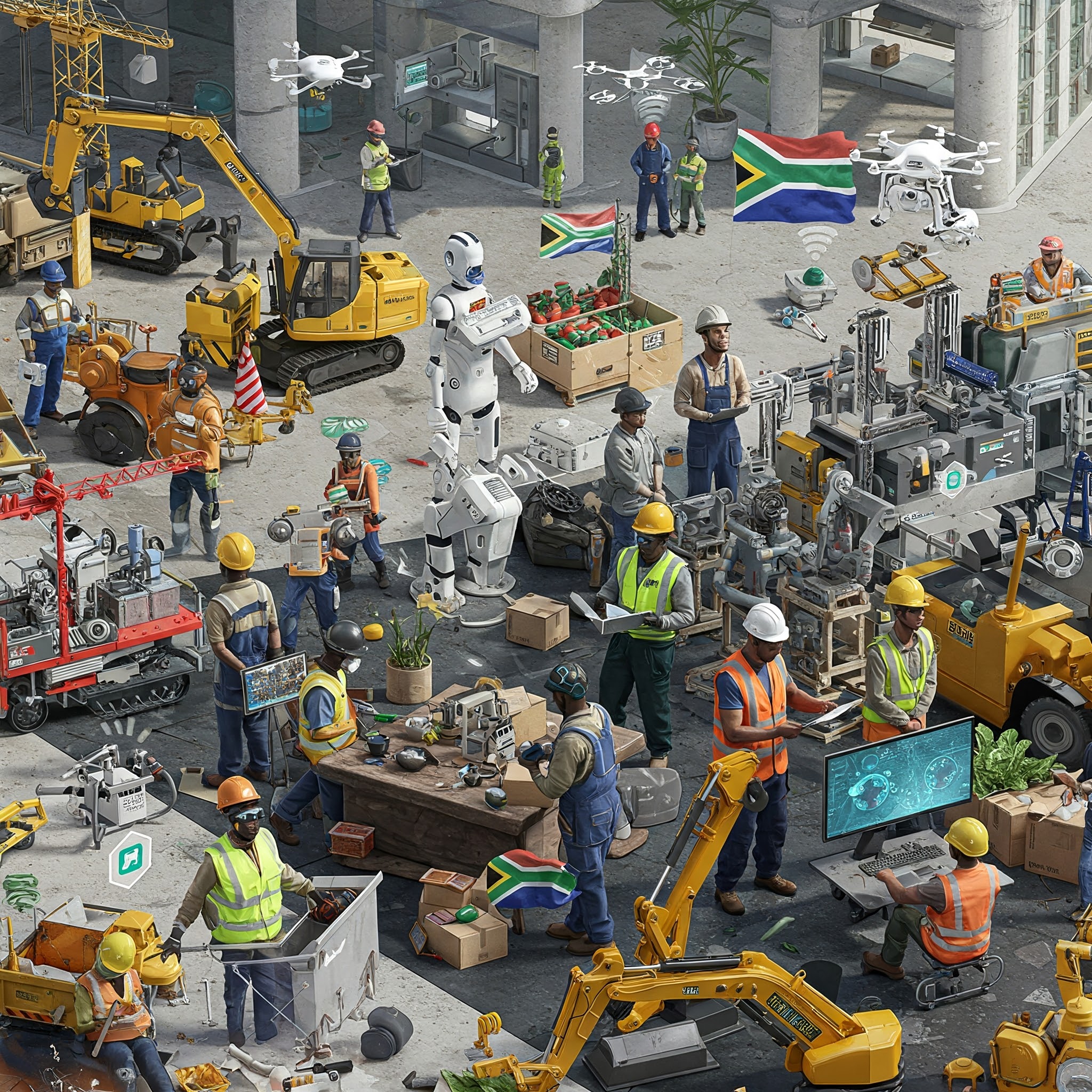
The future of AI in South Africa depends on strategic leadership. What should be our next steps?
A National AI Strategy for Economic Expansion
Government must spearhead a national AI roadmap, integrating AI into education, industry, and public policy. AI governance frameworks must ensure that AI implementation is aligned with employment growth. Policies should mandate AI impact assessments for large-scale automation projects, ensuring that AI is implemented in a way that complements human jobs rather than replaces them. A dedicated AI ministry or task force should oversee national AI strategies, monitoring progress and making necessary adjustments.
The Role of the Private Sector
Corporations must prioritise AI-driven workforce augmentation rather than pure automation. Investment in AI training programmes and partnerships with local universities will be key. Businesses should commit to AI-driven reskilling initiatives, ensuring that employees displaced by automation are redeployed into higher-value roles. Incentivising AI adoption in ways that promote job creation, such as tax benefits for AI companies that hire and train workers, can ensure that AI benefits are widespread. Large corporations should also collaborate with startups to drive AI innovation, fostering an ecosystem where new AI-powered industries emerge.
The Future of Work: Reimagining Jobs in the AI Era
What will jobs look like in an AI-powered South Africa? Many will be AI-augmented rather than AI-replaced. AI ethics specialists, AI trainers, and AI system supervisors will be in high demand. New AI-driven industries, such as AI-powered agriculture, precision medicine, and fintech, will create jobs that never existed before. South Africa must prepare now by investing in research, workforce development, and industrial AI strategies that prioritise job creation.
Data-Driven Arguments: AI’s Role in Economic Growth
AI presents unprecedented economic opportunities. Globally, AI is predicted to contribute up to $15.7 trillion to the economy by 2030, with $6.6 trillion coming from increased productivity (PwC). Locally, South Africa stands to benefit immensely from AI-powered innovation. For instance:
• In agriculture, AI-driven tools have improved crop yield forecasts, enabling farmers to combat climate unpredictability.
• In healthcare, AI solutions are being piloted in rural clinics to detect diseases like tuberculosis with remarkable accuracy.
• Logistics giants are already using AI to optimise delivery routes, cutting costs and improving operational efficiency.
These examples, and many others not stated here, underscore AI’s dual capacity to boost productivity while catalysing new industries and roles, making it an essential driver of South Africa’s economic transformation.
AI as a Force for Prosperity, Not Job Destruction
AI is not inherently destructive to jobs; it is our approach to AI that will determine whether South Africa experiences mass displacement or mass prosperity. By adopting the above strategies and recommendations, South Africa can position itself not just as a consumer of AI technology but as a global leader in AI-driven economic transformation and inclusive growth. If we act strategically, AI can be the engine of an economic renaissance, turning South Africa into a global leader in AI-driven employment.
The time for leadership is now. Will we merely react to AI’s disruptions, or will we embrace AI with the boldness and foresight it demands? I believe we must – for our economy, our people, and our future.
AI’s potential to grow South Africa’s economy and create massive employment is not a distant ideal. It is an achievable reality, provided we act with intention and urgency. The answer lies in decisive action, strategic investment, and an unwavering commitment to inclusive growth.
South Africa’s future is being written in lines of AI code. The question is: Who will be writing that code?
Images by Bandile Ndzishe of Bandzishe Group
About bandile ndzishe

Bandile Ndzishe is the CEO, Founder, and Global Consulting CMO of Bandzishe Group, a premier global consulting firm distinguished for pioneering strategic marketing innovations and driving transformative market solutions worldwide. He holds three business administration degrees: an MBA, a Bachelor of Science in Business Administration, and an Associate of Science in Business Administration.
With over 30 years of hands-on expertise in marketing strategy, Bandile is recognised as a leading authority across the trifecta of Strategic Marketing, Daily Marketing Management, and Digital Marketing. He is also recognised as a prolific growth driver and a seasoned CMO-level marketer.
Bandile has earned a strong reputation for delivering strategic marketing and management services that guarantee measurable business results. His proven ability to drive growth and consistently achieve impactful outcomes has established him as a well-respected figure in the industry.
As an AI-empowered and an AI-powered marketer, I bring two distinct strengths to the table: empowered by AI to achieve my marketing goals more effectively, whilst leveraging AI as a tool to enhance my marketing efforts to deliver the desired growth results. My professional focus resides at the nexus of artificial intelligence and strategic marketing, where I explore the profound and enduring synergy between algorithmic intelligence and market engagement.
Rather than pursuing ephemeral trends, I examine the fundamental tenets of cognitive augmentation within marketing paradigms. I analyse how AI's capacity for predictive analytics, bespoke personalisation, and autonomous optimisation precipitates a transformative evolution in consumer interaction and brand stewardship. By extension, I seek to comprehend the strategic applications of artificial intelligence in empowering human capability and fostering innovation for sustainable societal advancement.
In essence, I explore how AI augments human decision-making and strategic problem-solving in both marketing and other domains of life. This is not merely an interest in technological novelty, but a rigorous investigation into the strategic implications of AI's integration into the contemporary principles of marketing practice and its potential to reshape decision-making frameworks, rearchitect strategic problem-solving paradigms, enhance strategic foresight, and influence outcomes in diverse areas beyond the marketing sphere.