

A Well-Defined and Executed Brand Strategy for Competing Successfully Globally, Against Bigger Global Brands
I have chosen a ‘local-as-lekker’ brand which was impressively successful in competing against giant global brands in its product offering category. I am exploring the brand’s well-defined and executed brand strategy and its elements which propelled it to achieve tremendous global success on a massive scale unimaginable. The colossal success of SABMiller was so lucratively attractive to the extent that it was acquired by Anheuser-Busch InBev for a whopping $104 billion (R1.5 trillion). After the acquisition, SABMiller became defunct as an independent global brewing company.
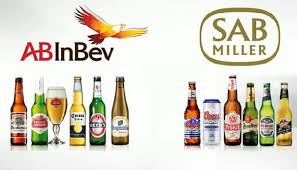
SABMiller possessed a well-defined and executed brand strategy that led to its global success and ultimate acquisition by Anheuser-Busch InBev
SABMiller was undisputedly one of the global leader brewers hailing from South Africa with over 200 beer brands and circa 70,000 workers in more than 75 countries. The firm was established and incorporated in 1895 as the South African Breweries to satisfy the rising beer consumption demand of miners and gold prospectors who lived nearby and within Johannesburg.
SABMiller displayed a good understanding of how a brand strategy works and how to execute it in a way which delivers brand recognition and profitability. The firm implemented a successful and effective brand strategy in which its current and potential customers resonated and connected with the brand, what it stands for, and what it does and seeks to achieve. As a result, today, even as a subsidiary of Anheuser-Busch InBev, the SABMiller brand is a global phenomenon recognised almost in every country.
In a nutshell, when SABMiller made a strategic decision to expand into other global markets, it developed a well-defined brand strategy which was well-executed to achieve its global expansion mandate. Subsequently, the organisation has grown globally since the early 1990s and made various acquisitions in developing and developed markets.
In 1999, SABMiller established an entirely new UK-based holding company, SAB plc, and relocated its primary security exchange listing to London, making it a British multinational conglomerate. SABMiller plc was headquartered in Woking, England on the outskirts of London until 10 October 2016 when it was acquired by Anheuser-Busch InBev.
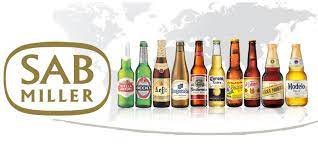
The elements of SABMiller’s brand strategy that enabled it to achieve massive global success
1. Purpose
The brand element which made SABMiller achieve its high levels of success was the company’s brand purpose which was to build a portfolio of differentiated premium brands that met and satisfied consumers’ needs across global geographies. SABMiller achieved the purpose of developing a diversified selection of a portfolio of premium brands, domestically and internationally alike, despite persistent economic problems.
2. Consistency
SABMiller consistently increased the profitability of domestic subsidiaries on a long-term basis, whilst meeting and satisfying consumers’ needs. The company’s goal was to consistently improve its organisational efficiency and operational performance by meeting its targeted top-line growth and increasing productivity and reducing costs. The corporation critically defended and promoted its brand reputation through the consistency of messages communicated to customers and displayed business activities.
3. Emotion
SABMiller used its differentiated portfolio of premium brands strategy as a differentiation that connects with customers emotionally in each country by satisfying customers' needs and desires. They used campaign slogans such as “The friend that brings friends together”, “The flavour of joy”, etc. Such emotional engagement campaigns fostered the idea that when friends are together, they share good times drinking SABMiller beers. This created emotional attachments to the brand each time when people got together for a casual beer and major celebrations.
4. Employee Involvement
SABMiller understood the pivotal role played by its employees in driving the success of its global beer business. The company utilised employees as an integral part of the branding initiatives in daily operations, interfacing and communicating with customers. Employees were skilled in workshops and training sessions about customer care, speaking in one brand voice, and communicating a consistent brand message across all customer touch-points.
SABMiller was truly a South African global brand success
story. No wonder the company’s
acquisition by Anheuser-Busch InBev was $104 billion (R1.5 trillion), a symbol
of great business prosperity. The
acquisition transaction cleared the path for the establishment of what is today
by far the planet's biggest brewing corporation.
SABMiller owed its great global success to its well-defined and executed brand strategy for competing successfully against bigger global brands.
About bandile ndzishe
Bandile Ndzishe is the CEO, Founder, and Global Consulting CMO of Bandzishe Group, a premier global consulting firm distinguished for pioneering strategic marketing innovations and driving transformative market solutions worldwide. He holds three business administration degrees: an MBA, a Bachelor of Science in Business Administration, and an Associate of Science in Business Administration.
With over 30 years of hands-on expertise in marketing strategy, Bandile is recognised as a leading authority across the trifecta of Strategic Marketing, Daily Marketing Management, and Digital Marketing. He is also recognised as a prolific growth driver and a seasoned CMO-level marketer.
Bandile has earned a strong reputation for delivering strategic marketing and management services that guarantee measurable business results. His proven ability to drive growth and consistently achieve impactful outcomes has established him as a well-respected figure in the industry.
As an AI-empowered and an AI-powered marketer, I bring two distinct strengths to the table: empowered by AI to achieve my marketing goals more effectively, whilst leveraging AI as a tool to enhance my marketing efforts to deliver the desired growth results. My professional focus resides at the nexus of artificial intelligence and strategic marketing, where I explore the profound and enduring synergy between algorithmic intelligence and market engagement.
Rather than pursuing ephemeral trends, I examine the fundamental tenets of cognitive augmentation within marketing paradigms. I analyse how AI's capacity for predictive analytics, bespoke personalisation, and autonomous optimisation precipitates a transformative evolution in consumer interaction and brand stewardship. By extension, I seek to comprehend the strategic applications of artificial intelligence in empowering human capability and fostering innovation for sustainable societal advancement.
In essence, I explore how AI augments human decision-making and strategic problem-solving in both marketing and other domains of life. This is not merely an interest in technological novelty, but a rigorous investigation into the strategic implications of AI's integration into the contemporary principles of marketing practice and its potential to reshape decision-making frameworks, rearchitect strategic problem-solving paradigms, enhance strategic foresight, and influence outcomes in diverse areas beyond the marketing sphere.